Streetwise Professor

November 11, 2026

Unravelling a Tangled Web: SpaceX, The Russian Pinning of X36, and the Depletion of American Weapons Stockpiles

Filed under: AI,Military,Politics,Russia,Tesla — cpirrong @ 11:58 am

R.A.B. (@LibertyLynx) and I have completed a document (attached) that fully details the October “pinning” of ICEYE X36 and the (serious and disturbing) implications thereof. The document also examines the depletion of US magazines in the ongoing war with Iran. That latter angle is an important story in its own right, but as will be seen, it also intersects with the X36 incident in important ways.

The document is extremely dense–purposefully, because the details are important and because it’s essential to support extraordinary findings with extraordinary evidence. Crucially, all of this information is derived from public sources. We also indicate types of non-public information that could potentially falsify our conclusions, though that would be awkward for SpaceX in particular as it would require it to falsify its own public data.

For those who prefer video–here you go. More fine work by R.A.B.

If you don’t want to dive into the details, there are a couple of key takeaways. First, in the midst of a Trump effort to flatter Putin and coerce Zelensky into a peace deal, SpaceX made possible Russia’s pinning and compromise of a satellite that both Ukraine and the US rely on for crucial intelligence. Second, Hegseth and Michael embedded xAI/SpaceX in Pentagon targeting, shutting out others (namely Anthropic); relied almost exclusively on AI for targeting, claiming that the resulting speed was war-winning, when in fact it did not result in Iran’s defeat but did succeed in speeding up the depletion of US weapon stocks. Both have materially weakened the US.

As we note, timing is a decisive causal determinant. And here the timing is quite disturbing. The SpaceX throttling of defensive Ukrainian drones and its essential role in the pinning of a US intelligence satellite (which we show could have occurred by chance with a probability close to zero) occurred in the very middle of Trump’s very public courting of Putin and very public demonization of Zelensky, all part of his frenzied pre-midterms effort to get a peace deal, shift the blame for high fuel prices, and gain some fuel price relief. It takes a Herculean effort to conclude that these events are not connected.

Pause and think about that for a moment, and think about it again after I’ve gone through some of the implications.

It is particularly appalling that the throttling and pin occurred in the context of a vain and futile attempt to seduce Putin into a peace deal. All that Trump and his minions (notably Witkoff and Kushner) have dangled before Putin are but mere baubles to him. The man has sacrificed hundreds of thousands of Russian lives and has inflicted severe short term and long term damage on the Russian economy, and the well-being of Russians, in pursuit of his obsession to conquer Ukraine. Only the delusional would think sanctions relief or business deals will deflect him from pursuing that goal. Doing things that harm US national security in pursuit of a chimerical deal is disgraceful.

The document also details several post-pin events that like waves in a pond demonstrate that something big hit the water. These are:

  • Putin stated that the Russia was coordinating with “Mr. Musk” in space.
  • Finland announced that it is taking control of three ICEYE satellites-X36, X37, and X38, which just happen to be the ones compromised by the pin.
  • The day after the pin ended, a contractor (Stellar Exploration) that provided crucial systems that we show were compromised by COSMOS 2612’s 40 plus hour sub-kilometer stalking of X36, engaged in a restructuring transaction in the Czech Republic that reduced the ownership of the US party from 80 percent to 33 percent and gave the largest share to a Czech individual, which conveniently places the contractor under the shield of Czech and EU commercial-secrecy law. Said law protects it from any US investigation or audit short of a criminal investigation by the DOJ.

The Finnish story is woefully under-reported because it clearly implicates what happened just a few days before the Finnish announcement. Note what the article says:

The threat does not necessarily have to involve a direct attack on a satellite. Other possibilities include interference with navigation signals, attempts to take control of systems, cyberattacks on ground infrastructure and activities by other space objects that approach satellites and interfere with their operation. 

“Approach satellites and interfere with their operation.” Which is exactly what happened in mid-October.

Again, the timing of the Finnish announcement is telling.

We uncovered the information about Stellar. We only became aware of its existence when its CEO–the US citizen of Czech extraction who charitably gave up a 47 percent stake in the company the day after the pin ended–lost his mind at us on X. Not smart!: That outburst prompted us to do a little digging, which uncovered that Stellar provided the very electrical systems that were compromised by COSMOS 2612. Further digging uncovered the stock switcheroo (filed in the Czech Republic) that is a transparent attempt to impede US inquiries: Czech law shields companies with a foreign owner holding less than 33.3 percent of the stock, and after the switcheroo the CEO owned 33 percent. Only a DOJ investigation (not the Pentagon, for instance) can get past that.

This transaction is a red flag: why would anyone do it except to try to stymie an investigation? A lack of a DOJ investigation would be another.

The timing is telling here too.

Another important takeaway is what links the pinning and US magazine stories, namely the information that the Russians obtained via the pin. Information that they could not have obtained otherwise. And it involves Stellar.

Specifically, from a sub-kilometer distance COSMOS 2612 could monitor and electronically map X36’s power and radar systems in ways impossible from the 400+ kilometer distance 2612 maintained before the pin: close proximity allowed COSMOS to overcome the clutter that prevented it from extracting signals from afar. The information gained allows it to determine X36’s power and battery state, and to monitor its radar use, from its current 66-90 second trail of X36. COSMOS 2612 can therefore determine whether X36 has sufficient power before recharging to conduct surveillance over the Persian Gulf. It can consequently give Iran several minutes warning of whether surveillance is impending. Minutes Iran can use to determine whether it is safe to break concealment to launch missiles–which depleted US Patriot and THAAD stocks limit our ability to shoot down. Minutes that it can use to scurry into concealment if it is aware that eyes from the sky are gazing at them.

And as we show, the pin did not compromise X36 alone: it compromised its sister satellite X37. Which, lo and behold, is being trailed by two other COSMOS satellites.

Thus, the pin degraded US capability in the Iran theater: the two non-SpaceX satellites on which the US relies on in the Gulf are compromised, and SpaceX played a necessary role in the compromising.

That US weapons stocks were depleted by the February-April conflict is what has leveraged the adverse impact of the pin. Which leads to another portion of the document: the highlighting of the role of Hegseth and his sidekick Emil Michael in relying on AI to accelerate targeting, which resulted in the magazine depletion which leverages the adverse consequences of the pin.

Until, well yesterday, Hegseth and Michael constantly preached that speed is lethality, and bragged about how the US had used AI to dramatically speed up targeting in the Gulf, allowing more targets to be struck in less time. Indeed, they were so giddy about the efficacy of AI that they slashed the number of humans tasked to targeting in CENTCOM from 16 to 1.

But it is evident that speeding up a bombing campaign did not speed up Iranian capitulation. Nor did it deny Iran the use of important capabilities, namely asymmetric attacks that closed the Gulf of Hormuz, and missile attacks that hammered US bases in the Middle East (killing servicemen and women, and destroying many valuable intelligence and refueling planes).

What the targeting acceleration did accomplish was to speed up the expenditure of scarce US weapons. But crucially it did not speed up the replacement timeline: it will take years to replace the JASSMs, Tomahawks, Patriots, and THAADs shot off so quickly. US capability in other theaters, notably Asia-Pacific have therefore been seriously compromised.

In focusing on speed in a single theater, Hegseth and Michael ignored opportunity (“shadow”) cost–the value of these weapons in other theaters. This makes their firing of two JCS planning (J-5) chiefs look all the more suspicious. It is precisely such individuals who are responsible for taking a global perspective in designing military operations. We have little doubt that the fired (and traduced) generals raised hell about the extravagant expenditure weapons in a single theater, other theaters take the hindmost.

This all makes recent news even more striking. At a Wall Street Journal tech conference in Napa, former AI evangelist Michael suddenly turned all cautious and conservative and sober about it. He claimed the military “remains conservative about using artificial intelligence in combat,” insisted the U.S. “is not very sophisticated at AI-generated targeting,” and lectured that “there must be appropriate human judgment at every level” right as his shop floated new “AI compliance guidelines.”

“AI? AI? What’s that? Never heard of it. Does it have something to do with computers? I don’t even know how to use a computer!” Mr. Michael is apparently shocked, shocked! to find AI going on in here.

The stories we have documented are important in their own right. But they are just one element of extreme dysfunction within the Pentagon, dysfunction that will be turned up to 11 by the looming Hegseth impeachment. (Yes, the initial attempt failed: wait until January). Hegseth has allegedly threatened Trump that he is going to the mattresses rather than resign–with the message being delivered by a lawyer who is a protege of and former defender of John Gotti’s mouthpiece, and a mouthpiece for Bonnano and Geneovese associates in his own right, no less. This internecine conflict will make the dysfunction even more extreme.

And who is in the middle of all this but the suddenly sotto voce Mr. Musk. SpaceX played a central, indeed necessary, role in the pinning of X36. xAI is the central player and the main beneficiary in the suddenly amnesiac Mr. Michael’s drive to inject AI into crucial DoD decision making.

We wish we could say that this document is the end of the story. Unfortunately, it appears to be just the beginning.

October 27, 2026

There are No Coincidences, Comrade: The ICEYE X36 Intercept and the Throttling of Ukrainian Defensive Drones

Filed under: Military,Politics,Tesla — cpirrong @ 6:37 pm

The evidence for SpaceX’s vital and unilateral role in (a) the Russian intercept of the ICEYE X36 satellite (which supports Ukrainian deep strikes into Russia) and (b) throttling the white-listed Starshield terminals Ukraine uses to defend against attacking Russian drone waves is massive, and nigh on indisputable.

When reports first broke that COSMOS 2612 had tracked and cut off ICEYE X36, R (aka @LibertyLynx) immediately suspected that the Russians did not have the tracking capability to pull that off on their own, suspected SpaceX involvement, and built an orbital model to test the theory. We then ran parallel models to cross-check the results, and the attached brief lays out the case in deep, and very technical, detail. It is based on the best and most complete publicly available information, including information produced by SpaceX, which is particularly damning

In brief, to recapitulate, on 16 October 2026 the Russian COSMOS 2612 sprinted from hundreds of kilometers away from ICEYE X36 and stopped on a dime within a few hundred meters of the US/NATO satellite. The likelihood that it could have done this on its own is near zero. Moreover, SpaceX was the only entity with the information and power to permit this intercept.

Maybe the brief will cause MEGO. But an animation (also created by R) that incorporates the information is an eye opener.

When I first viewed the video it reminded me of a football sweep play, with the Russian satellite in the role of a running back following the lead block of Starlink 35856, which pinned ICEYE X36 in place, allowing COSMOS 2612 to hit the hole right next to it.

Could have been a coincidence, right? Or the Russians just got lucky, eh?

Almost certainly not.

First, the Russians would not have had the information to guide COSMOS 2612 with that degree of accuracy, especially if ICEYE X36 had the ability to maneuver (more on that later because it is crucial). Russia has no space-based tracking assets, and relies on ground-based systems which are blind for 8-10 hours (due to the earth’s curvature). Further relying on COSMOS 2612’s onboard sensors limited range would have resulted in a miss of over 100km if ICEYE X36 had engaged in a brief avoidance burn.

But there was no burn. Why not? That is the central question here, the answer to which is particularly damning.

In response to an attempted approach in June, ICEYE X36 did engage in successful evasive maneuvers. Don’t believe me? How about ICEYE’s CEO, Rafał Modrzewski, who explicitly confirmed on the record to Reuters that ICEYE actively maneuvered its satellite to evade the Russian spacecraft, and that Russian maneuvers followed. Moreover, we have confirmed this in the data: independent reconstruction of all ~3,600 public Space-Track element sets explicitly verified X36’s maneuver on 25-26 June.

So why in June, but not in October? Because it couldn’t, that’s why. And why not? Because it was pinned. By whom, and how? By SpaceX, exploiting its unprecedented control in space, courtesy in large part to FCC regulations.

In brief, SpaceX issued a collision alert to ICEYE X36 for Starlink 35856, based on an assertion that ICEYE X36 would be within .401 kilometers of Starlink 35856. Under FCC Condition 16–negotiated with SpaceX lawyers–this collision alert obligated ICEYE X36 to eschew any maneuvers. In other words, the alert fixed it in place, thereby enabling the COSMOS 2612 to engage in a braking maneuver that put it right beside the American satellite.

Damning fact #1: SpaceX’s own documentation demonstrates that the collision alert was unwarranted and unnecessary, because in fact the distance to Starlink 35856 was 4.8 to 5.0 times greater than the claimed .401 km. Based on the correct distance, no alert was needed.

Damning fact #2. Starlink satellites are known for their autonomous collision avoidance abilities. If there was a genuine .401-meter collision risk, STARLINK-35856 could have—and normally would have—autonomously pulsed its thrusters to clear the corridor. Instead, SpaceX withheld that autonomous maneuver. By choosing not to move, they intentionally shifted the legal burden entirely onto ICEYE via FCC Condition 16. (Why should SpaceX insist that a vital US intelligence satellite yield right of way to one of its many satellites that primarily provide prosaic Internet connectivity?)

In brief, SpaceX engaged in acts of commission and omission without which the intercept would have been impossible.

To add to the disturbing implications, consider the following. The Russians would have known that it would have been futile to attempt an intercept if-as had been demonstrated in June-ICEYE X36 would be free to maneuver. The sprint and braking maneuvers were costly, and it would have been irrational to engage in them if the probability of success was nil. The only way the probability of success would have been sufficiently high to justify the cost would have been if the Russians were highly confident that ICEYE X36 would be pinned. And how could they have known that?

The plausibility of coincidence or luck vanishes when one considers the fact that the intercept was contemporaneous with the throttling of Ukraine’s Starshield terminals. These were whitelisted terminals, used to guide Ukrainian drone defenses. Once a Ukrainian drone exceeded the speed limit imposed by SpaceX, its connection was dropped, making it stupid. Note that Ukrainian drones operating within Russia were already limited to much lower speeds.

And by the way, when provided this information, Grok agreed that there was no coincidence here comrade, and assigned a less than .01 percent probability to this being a random coincidence.

Musk’s shifting stories also belie any innocent explanations. At first he said that the decision to throttle Ukrainian drones was a WH decision, because Starshield is operated by the US government. But that explanation exploded later when Hegseth and Rubio both stated that SpaceX had acted unilaterally pursuant to its Terms of Service with the US government. Musk later embraced the ToS story, claiming that they prevented Ukraine from using Starshield to kill anyone, and that Ukraine had violated this provision.

They just started doing that in October, Elon? Were you shocked! Shocked! to learn that Ukraine was using Starshield/Starlink for military purposes?

Interestingly, among the people whom Musk claimed he was protecting were “poor Russian conscripts.” Putting aside the fact that Russian troops are not conscripts (although they are often shanghaied into contract service), said Russian troops are killing Ukrainians. And further, by disabling the terminals, Musk increased the lethality of Russian strikes against Ukraine and Ukrainian civilians in particular.

Interesting to know Elon’s solution to this particular trolley problem.

The main point here is that SpaceX played a central role in compromising both Ukraine’s defensive and offensive capabilities at the precise same time. And in explaining the former, he engaged in a virulent rant against Zelenskyy. In that context, any innocent explanation of the intercept crumbles.

The implications of this go well beyond the events in Ukraine, as the brief discusses in detail. Unlike legacy defense contractors, including those involved with highly classified space and satellite operations, SpaceX operates on a “CO-CO” model: contractor owned, contractor operated. This contrasts with the legacy GO-GO model, in which the government buys, owns, and operates what the contractors produce.

The contractor-SpaceX here-provides services according to a contract: the “Terms of Service” that appear so notoriously in the foregoing. It is clear that these ToS provide tremendous discretion to SpaceX to make decisions that have grave national security implications. It is also clear that these it is willing to exercise these powers in ways that are inimical to US security interests.

And don’t think this is the only time. During the Iran War SpaceX invoked its ToS to prevent the use of Starlink to mount LUCAS drone strikes against Iran. Until, that is, the Pentagon agreed to pay a 4x greater fee to SpaceX. Which reminds me of the old Churchill line: Now we know what you are. We are just haggling over price.

This is all the more disturbing given the greatly expanded role of SpaceX, and Grok in particular, in every aspect of US military operations. It is sickly ironic that Hegseth and his tech chief Emil Michael declared Anthropic a national security risk for demanding that it retain a veto over the use of Claude given that they have supplanted it with a contractor who has used such a veto to the detriment of US security interests.

In the present instance, how bizarre is it that the US military would enter into a contract which allowed its counterparty to veto decisions to kill people? After all, the military’s job is, well, to kill people. The decision to do so is vested in Constitutionally established authorities operating subject to US law. It is not vested in Elon Musk, and it is incomprehensible that the US government has entered into contracts that grant him that authority.

This is a classic problem in transaction cost economics. SpaceX provides very specific assets (specific in the technical economic sense) to the United States government, and the Department of Defense in particular. The specificity of these assets gives SpaceX incredible power to hold up the government. Contracts should be crafted to limit this holdup power. Instead the Pentagon has enabled it.

GOGO is the default organizational response to holdup problems. Given the acute severity of the holdup problems posed by SpaceX, unless the government can find a way to write much better contracts with it, it should move back to that model.

But hot-from-the-presses news suggests that this is a vain hope, at least under the Hegseth Pentagon. The Defense Intelligence Agency just released “Challenges to Security in Space: Congestion, Competition, and Cooperation.” It relies on a Russian propaganda site (topwar.ru) and TASS (!) to hype Russian capabilities (namely its ground-based Krona surveillance complex).

The reliance of this document on a trash Russian military site renders it little better than the Steele Dossier, or the hack job on Russian election interference that the outgoing Obama administration cobbled together in January 2017.

Moreover, the timing is rather, shall we say, odd. Lo and behold, the day after Elon offered his fourth explanation for throttling Ukrainian drones, specifically that if he didn’t Russia would target Starlink satellites, the DIA drops a report citing topwar.ru to warn of Russian threats to American satellites. A coincidence, surely. If you believe that . . .

But there are indications that American dogs are fighting under the carpet–specifically the State Department and the Pentagon. Rubio was clearly displeased at the Ukraine drone throttling, and the fact that this was a Musk decision. The State Department was also infuriated by the intercept, taking a complaint to the UN. And Rubio just recently fired one of Musk’s operatives. So we must hold out hope that Rubio (whom Trump surely holds in greater esteem than Hegseth, and hopefully Musk) will be able to put a stop to this madness.

October 23, 2026

Nice Little Satellite You Got Here. Shame If Anything Were to Happen to It.

Filed under: China,Military,Politics,Russia,Tesla,Ukraine — cpirrong @ 2:16 pm

Yesterday’s post presented the evidence for and the implications of Elon Musk’s throttling of Ukraine’s Starlink/Starshield access. Since then, additional evidence makes this an established fact. Most notably, reporting in the WSJ that Trump (on bended knee?) asked Musk to release his grip (and WSJ reporting today that uneven Starshield restrictions are still persisting even after Trump’s call). When asked about it, the normally no-filter Trump declined to answer. Mark that down as confirmation.

But it gets better! Today’s brief, co-authored with @LibertyLynx (who originated, architected, and built the entire SGP4 orbital, FCC regulatory, and corporate forensic investigation from the ground up), demonstrates the near certainty that in addition to undermining Ukraine’s defensive capabilities (where the 130 to 160 km/h speed cap cut Ukrainian Unmanned Systems Forces validated target output by 23.0%), Musk/SpaceX compromised, or at least threatened to compromise, Ukraine’s offensive capability. Specifically, its capability to attack refineries and other targets within Russia.

The brief is extremely detailed and extensive, so here’s the TLDR version (though I do encourage reading it). Ukraine relies on Starlink/Starshield to control drones for operations at the front (and the logistical zone) and counter Russian aerial attacks. It does not use Starlink for reconnaissance and targeting of strikes deep inside Russia. For that it relies on Synthetic Aperture Radar (SAR) imagery from the ICEYE-X36 (NORAD 59103) satellite, operated by ICEYE US (the U.S. subsidiary of a Finnish company, operating under FCC license S3165).

Beginning on 15 October, within 48 hours of the Starshield throttle, a Russian inspector satellite, COSMOS 2612 (NORAD 68762), maneuvered to within less than a kilometer of X36 (closing to 0.76 km in the public catalog, and within a few hundred meters per optical trackers). And here’s the thing. Russia relies on ground-based radars that can only observe an orbiting satellite like X36 for narrow time windows (leaving 6 to 11 hour tracking gaps), and which do not allow it to track X36 continuously and with sufficient precision to arrange an intercept in which COSMOS 2612 compressed 364.3 hours of natural orbital drift into a 25.5-hour sprint (a 14.29x closure compression from 425 km away, cutting separation by 382.7 km relative to its pre-sprint orbit), braked, and then remained within a kilometer for more than 12 hours before moving away. (And across every Russian maneuver transition, the public Space-Track catalog lagged behind by 19.4 to 22.7 hours.)

Who can provide that real-time information? SpaceX. At the exact time COSMOS 2612 began its sprint (15 October at 04:15 UTC), X36 sat inside a 401-meter public collision alert with SpaceX’s STARLINK-35856 (NORAD 67013, where SpaceX’s private operator ephemeris diverged from public data by 15.37 to 30.13 km while carrying a 2.862 km 3D position uncertainty). Because X36 only has one trajectory, this overlapping Starlink alert pinned X36 in place—preventing it from executing a 0.5 km evasive altitude drop as it had in June (which generates 71 km/day of drift and exits a 3 km Russian braking box in 61 minutes), while requiring X36 under FCC Condition 16 to coordinate its trajectory with SpaceX. Under SpaceX’s Space Safety Terms of Service (Appendix A and Section 4(b)), committed maneuver trajectories uploaded to SpaceX are exposed to third-party sharing with a $500 liability cap (Section 10). Moreover, SpaceX tracks the 540 to 550 km orbital shell at 10 to 15 minute intervals using its 31,000 Stargaze cameras—and conveniently onboarded Chinese operators to its Space Safety platform on 6 and 16 October. Again, with its ground resources alone, Russia would have been flying COSMOS 2612 blind.

No other entity has all five of these capabilities. The intercept would not have been possible without these capabilities.

Nice little satellite you got here. A shame if anything happened to it. A threat that could only have been delivered with the help of SpaceX/Starlink/Musk. I further note that Russia has not delivered a similar threat to any Starlink asset while Tesla’s Q3 10-Q (filed 30 September) discloses $5.966 billion in rolling Chinese working-capital debt maturing between October 2026 and September 2027 and explicitly admits “presumed significant influence” over SpaceX through their shared CEO.

Goldfinger famously said: “Once is happenstance. Twice is coincidence. Three times is enemy action.” The simultaneous throttling of Ukraine’s defensive capability and compromising/threatening of its offensive capability, the first definitively attributed to SpaceX and the second solely within SpaceX’s capability, makes plain that Musk has acted against Ukraine and for Russia. Enemy action, indeed.

SpaceX’s culpability here is indisputable. The only open question is whether Musk acted on his own, or in connivance with the administration/Pentagon. And just as was the case with yesterday’s post, both alternatives are disturbing in their own way.

Trump’s, Rubio’s, and Hegseth’s claims that the administration had nothing to do with throttling Starlink may or may not be true. Trump’s asking Musk pretty please to turn it back on could be genuine, or it could be Kabuki. Again, neither alternative is good. If the President of the United States is reduced to a supplicant, and Musk has the unilateral authority (shielded by commercial Terms of Service) to make decisions with such vital national security implications, and perhaps to do so in cooperation with American enemies, we are in a very bad place. Especially given how embedded SpaceX currently is within the Pentagon as we head toward Round Two with Iran.

October 22, 2026

Who Is Kneecapping Ukraine: Trump or Musk? Either Way, It’s A Deeply Disturbing Development

Filed under: Military,Politics,Russia,Tesla,Ukraine — cpirrong @ 11:51 am

The on again, off again battle between Donald Trump and Volodymyr Zelensky is back on, and in a big way. The trigger for this most recent outbreak was news that somebody throttled Ukraine’s Starlink/Starshield link, limiting the speed of Ukraine’s fast drone interceptors which are essential to countering Russian jet-powered drones. As documented in the attached brief/strategy memo (prepared by @LibertyLynx) Russia responded by utilizing jet drones more extensively, and delivering more effective strikes on Ukraine. Against civilian targets in Ukraine, I might add.

It’s rather remarkable how rapidly Russia recognized and responded to Ukraine’s degraded capabilities.

As the document also describes in detail, this also has implications for US national security. Most notably, it works to the advantage of Russia in its forever war against Ukraine. But that’s not all. It forces Ukraine to substitute high end interceptors for low end ones, further depleting already nearly barren magazines–which creates a call on stocks from US allies and perhaps the US itself. Given the extravagant expenditure of weapons in the Iran War, our cupboard is increasingly bare, and we have nothing to spare.

Note that I said “somebody throttled” Starlink/Starshield. That phrasing was deliberate. Because we don’t know who did so. There are two possible answers, each deeply disturbing in its own way.

The first answer is that Trump made the call. Elon Musk says it was the USG, meaning Trump. Trump denies it. Rubio denies it.

Why would Trump do this? His animosity towards Zelensky is well known, and he has long been impatient with Zelensky’s resistance to a peace deal. With the midterms approaching, and fuel prices high, Trump is even more desperate for a deal. He may therefore believe that pressuring Zelensky will break the deadlock and allow him to announce peace in our time.

But handicapping Ukraine’s defenses will not achieve this outcome, especially not in Trump’s time frame. It is fantastical to imagine that such a deal could get done in the few days prior to the midterms, and even if a deal were to be done tomorrow its impact on energy prices would be (a) modest, and (b) delayed to well after the election. As much as Trump fulminates to the contrary, energy prices are driven first and foremost by the situation in the Gulf. The loss of Russian refined and crude supplies due to sanctions (which would presumably be lifted as part of a deal) and Ukrainian attacks is at most an aggravating factor.

It is also fantastical to think that Putin is just standing by waiting to do a deal, and that Zelensky is the only obstacle to one. Indeed, measures that weaken Ukraine’s defenses will only embolden Putin to continue to fight, figuring that he can gain more against a weakened Ukraine and perhaps even achieve his goal of conquering additional territory, and perhaps the entire country. Putin will deal only if he thinks defeat is inevitable. Giving him hope of something he can call victory will only prolong the war.

So if the rationale for kneecapping Ukraine is to facilitate an end to the war in days, followed forthwith by a sharp drop in energy prices, all in time to rescue the Republicans from an electoral rout, it is beyond delusional.

And it’s also politically stupid. This–and Trump emissary Witkoff’s obsequious behavior towards Putin, and Trump’s bizarre statements about how Russia isn’t doing anything bad in Ukraine–has generated tremendous political blowback, and has played into the narrative that Trump is Putin’s puppet. So if anything, it is politically counterproductive from the perspective of the midterms in particular.

But maybe the administration’s denials are in fact truthful, and Elon Musk is in fact responsible. Think about that for a minute.

Pete Hegseth (the primary author of the failed strategery in the Gulf) says that SpaceX throttled Starlink/Starshield because Ukraine violated “Terms of Service.” What? They didn’t read the fine print and just clicked “accept”? Or they just decided in early-October to do something different that violated the ToS? Or SpaceX changed the ToS? Or Ukraine refused to cease and desist from violating the ToS and SpaceX lost patience?

What changed in the last few weeks to trigger this intervention? The “ToS” excuse begs every question that matters.

For his part, J. D. Vance said it is totes understandable that Musk decided to intervene:

So much wrong here. For one thing, SpaceX has been “in the middle of a war between two state actors” for several years now. Indeed, SpaceX has been instrumental in staving off Russia’s invasion, both by providing Starlink to Ukraine and denying it to Russia. What would explain a sudden reluctance on its part?

Moreover, the throttling of Starlink/Starshield has impaired Ukraine’s defensive capabilities, not its ability to strike Russian territory. Denying Ukraine truly defensive capability is particularly twisted, and has already cost civilian lives. Musk somehow thinks that Ukraine defending itself is unacceptable? And just decided this last month?

And how is it remotely OK for the United States to grant Musk a veto over the employment of Starlink/Starshield? Since 2023, Starshield has been under contract with the US government to provide Starlink services in Ukraine. The Pentagon was not willing to grant Anthropic the right to withhold services when it disagrees with how the Pentagon was using its AI (excuse me, SI): have they granted comparable rights to Musk? If so, why? If not, how is he getting away with exercising such power without contractual sanction?

Or maybe he’s not, and the administration is lying and it made the call.

Given how deeply embedded in the Pentagon SpaceX is now (at the expense of Anthropic, in particular), these events have disturbing implications that go far beyond Ukraine. Does the USG negotiate “terms of service” with SpaceX that give it the ability to throttle services to the Pentagon (e.g., throttling Grok) at its whim? Or can Musk exploit contract incompleteness to make unilateral decisions that impair US national security? Or is it difficult to enforce contractual terms against him because there is no alternative over a horizon of weeks or months? Under any of these possibilities, a mercurial, deeply untrustworthy, and highly conflicted individual has far too much power over American national security.

In earlier posts/briefs @libertylynx and I analyzed the holdup problems SpaceX/Grok/Musk poses. If it is indeed the case that the administration did not order the throttling, and Musk/SpaceX “understandably” did it on their own, we have been given a taste of how dangerous the holdup potential is.

There is no good alternative here. Either Trump and his administration made a decision based on delusional diplomatic, political, and military logic, or a deeply untrustworthy megalomaniac (other than the president) has the ability to make unilateral decisions that have dire consequences for American national security.

September 30, 2026

Hegseth and Civilian Academy Faculty: The Midwit vs. the Eggheads

Filed under: History,Military,Politics — cpirrong @ 12:47 pm

Yesterday SecWar/Defense Pete Hegseth made something of a splash with an announcement eliminating tenure at service academies. Well, the headlines were somewhat misleading. What he did was announce that in the future the academies would not offer tenure. This, of course, because existing tenure is a contractual commitment that cannot be revoked absent some rather egregious misconduct.

The effect of the change is also less than it appears because tenured or tenure track civilian faculty are non-existent at the Air Force Academy (USAFA), and a small proportion of faculty at West Point (USMA)–27 percent to be exact. Only at my alma mater, Navy (USNA) are civilians a majority of faculty, and most of those are tenured (about 70 percent). So if anything, this is aimed at Navy first and foremost.

Navy has long had a civilian-heavy faculty, and alums point to it as an indication of the greater academic rigor of USNA relative to its peers. (Perhaps that’s what really exercises Hegseth). Indeed, the “Father of the Naval Academy”-William Chauvenet-was a civilian, and responsible for its academic curriculum and hiring in its earliest days 180 odd years ago.

Chauvenet’s history is illuminating on the subject of civilian instructors. He was hired, as a civilian, to teach math to midshipmen on ships, before there was an academy. So even crusty old salts recognized the comparative advantage of civilian instruction. His dismay at the level of instruction midshipmen received led him to advocate the formation of an academy. Originally a two-year institution, he pushed to make it a full four year school. And he wanted it to be academically rigorous, and hence was a strong advocate of hiring civilian instructors. Chauvenet set the course for USNA (no pun intended), and it has sailed that course ever since. That course is fundamentally different from USMA and USAFA (which reflecting the Air Force’s origin in the Army is far more like USMA than USNA).

Chauvenet’s reputation in American academia was stellar. Yale tried to hire him, but eventually he became the chancellor of Washington University in St. Louis, where he established it as a leading academic institution.*

The age of steam, with its novel engineering challenges, was fundamental in transforming the school and its curriculum. Under steam pioneer Benjamin Isherwood, the Academy became primarily an engineering school. Isherwood was a career officer, but civilian appointments in engineering positions at USNA were common, and remain common today.

So Navy is different, and has always been different. The civilian-heavy instructional staff is reflective of that.

Even at Navy, there is less to Hegseth’s announcement than meets the eye: there is a stock-flow issue. Tenured faculty will decline one retirement (or funeral) at a time, meaning that in the remainder of this Trump term the order will have little effect on faculty composition. Since it well may be reversed under a future Secretary, the effect may be trivial. (I wonder what SecNav nominee Hung Cao, a USNA grad, thinks about this. BTW, there are rumors about that he doesn’t like Hegseth).

The reasons Hegseth gives for his order are eye-rolling:

“To ensure our educational institutions remain firmly focused on this warfighting mission, we must address the structural mechanisms that have allowed civilian academic norms to dilute our focus on lethality.” . . .“academic stagnation, faculty complacency, and institutional inability to adapt to emerging needs . . . . contributes to curriculum that drifts from the mission of educating our warfighters to the research priorities of the tenured academics.”

“Academic stagnation” and “faculty complacency” are things Adam Smith wrote about 250 years ago, and are hardly accurate characterizations of the civilian faculty I knew. Insofar as “research priorities” interfering with curriculum drift and impeding adaption to emerging needs, Hegseth is spouting nonsense. For one thing, the Academies are teaching schools, with heavy teaching loads where research input and output are low as compared to true research institutions. For another, especially with respect to technical fields in particular (which represent the bulk of civilian faculty at Navy), remaining research active actually facilitates, rather than impedes “adaption to emerging needs.” Hegseth’s statement is a slur on civilian profs at the academies.

Hegseth’s references to “lethality” and “warfighters” suggests the reasons his misguided opinions, and how they are particularly misguided with respect to Navy, where many junior officers spend their early careers managing equipment and technology or managing people who operate equipment and technology rather than pulling triggers.

That contributes to lethality. Indeed, the contribution is vital. If weapons or sensors or engineering plant don’t work, even Alexander the Great can’t make them lethal.

The irony here is that Hegseth claims to be technology-focused, with AI being a prominent example. (More on that story in the future). Well, mightn’t it be a good idea to have some officers educated in this? Wouldn’t the quality of this education be improved by faculty who are specialized in the field and who have a long term commitment to an institution where they teach it?

The only thing that saves Hegseth from his own stupidity here is the limited impact it is likely to have.

But of course there are very online Hegseth throne sniffers who offer their own stupid takes on his stupid policy:

Er, nobody-and I mean nobody-goes to an Academy to pursue an academic professorship. In fact, one pretty much has to leave an academy if one’s interests lie in that direction. Like me, for instance.** So Jeez, if you are going to try to suck up to Hegseth, at least try to make sense.

The more important part of Hegseth’s announcement is not the tenure piece, but this:

He directed the secretaries of the military departments to develop hiring plans prioritizing “institutional flexibility and contributions to the warfighting mission.”

This is problematic because hiring plans are well downstream from curriculum and curriculum design. Given the existing curriculum, there are at least two strong reasons to lean towards more, rather than less, civilian personnel.

The first is that teaching is a skill. My decades in academia have shown me that most people suck in their first couple of years in the classroom, no matter how great their domain knowledge. At the very least, it takes a few years to develop as teachers even if they don’t suck right off the bat. There’s a lot of learning by doing. Rotational military faculty (which dominate at USMA and USAFA) leave just about the time they hit their stride.

The second is specialization. The old adage about those who can’t do, teach, has something to it. Let eggheads specialize in teaching, and warfighters specialize in fighting wars, rather than having warfighters cosplay as teachers–something that is inimical to Hegseth’s stated objective.

Less flippantly, specialization offers other benefits. Specialists in a field have more domain knowledge and are on average more able to convey it than someone who parachutes in from the Rangers or whatever for a couple of years. Even more prosaically, teaching (especially with the heavy loads at academies) involves appreciable prep/setup time. Those costs are largely sunk for experienced civilian faculty teaching the same course for years. Every rotational faculty member has to incur them, and that happens every couple of years. Is that how Hegseth actually wants “warfighters” spending their time?

And just how, exactly, does one advance warfighting in Calc II? Beginning each class with a hearty “ooh-rah”? (My memories of uniformed profs at Navy–mainly in professional courses–are that they were hardly gung-ho.)

So given the curricula at the academies, reducing civilians in the ranks of professors doesn’t make sense. To the contrary.

Meaning that Hegseth should actually be focused on curriculum, rather than who delivers it. But that’s probably expecting too much from our Pete.

So the real issue is: should the academies have curricula that are comparable to rigorous civilian universities and colleges, with a considerable dollop of military-specific courses and training on top? I think the answer is yes, for several reasons.

The first is that rigorous, non-military education offers other benefits. It is a signal for intelligence and diligence. Done right (something increasingly rare these days) it trains people how to think critically and analyze, generalized skills that are clearly applicable in the military.

The second is that although each offers non-technical degrees (I was an econ major!), the bulk of midshipmen and cadets major in technical fields. (The jocks are an exception–but that’s a whole different subject). The very technical change that Hegseth talks about is a compelling reason to retain this orientation, especially since graduates are very technology facing during the early part of their service.

And even the “softer” fields provide things that advance the military mission of “lethality.” Economics, for example. One of the principles of war is “economy of force”–the efficient allocation of scarce resources to achieve objectives. That’s fundamentally a statement of economics generally that applies at tactical, operational, and strategic levels. As a specific example, constrained optimization is fundamental to economics–and directly applicable to military problems. (Linear programming was developed to optimize the allocation of ships to convoys during WWII). Logistics is in many ways applied economics, and logistics wins wars.

Perhaps if Hegseth understood constrained optimization better, he wouldn’t have shot off a goodly proportion of our scarce weapons in fighting Iran.

An appreciation of history is also a vital war fighting skill. Many great commanders (Napoleon among them, but more recently Norman Schwarzkopf) have been students of history and applied the lessons to win battles. And to win wars–something the US has not been particularly expert at in the last 80 years. Maybe having some more liberally educated officers would help address that problem.

I use “liberally” in that sentence in its traditional sense of “liberal education.” But I have a sneaking suspicion that another sense of the word liberal is what really drives Hegseth’s hostility to civilian faculty: specifically, civilian faculty, even at academies, are politically liberal.

There’s a podcast out there somewhere in which Victor Davis Hanson describes his experience as a visiting history prof at Navy, and his shock at learning how politically liberal the faculty were. When I interviewed for the Admiral Crowe Chair at Navy (which I was offered but declined), I was taken aback at the politics of the economics faculty (and their disdain for many Midshipmen).

But here’s the thing. Most of the faculty I interviewed with were my profs when I was a Mid. Yet I had no idea of their politics, although conditional on their cohort (getting doctorates in the 1960s) it should have been pretty obvious. They taught down the middle, and didn’t poison young minds with liberal dogma. (I’m living proof of that!) Classrooms weren’t politicized by civilian profs in the 1970s. Maybe it’s different now, but I doubt it.

In sum, Hegseth’s initiative is mid-witted and ignorant, and wrapped up on bravado. But I guess at this point, that shouldn’t be surprising.

* I seem to have a weird way of following around prestigious USNA professors, Chauvenet being one and Robert Michelson being the other. After teaching at Navy (where he commenced his speed of light measurements) he went to the University of Chicago, where he spent decades. Both men have academic buildings at USNA named for them. They were pretty new when I was there.

**From time to time during a deposition, opposing counsel thinks there is a dark secret underlying my departure from Navy. So when asked why I left the academy, my stock reply is: “Because I figured out I was more cut out to be a scholar than a boat driver.”

September 22, 2026

How Should AI Be Regulated?

Filed under: AI,China,Economics,Politics,Regulation — cpirrong @ 1:59 pm

AI hysteria has predictably led to calls to regulate! regulate! regulate!, seemingly from all corners except for the Trump administration and NVIDIA’s Jensen Huang. Those baying for “regulation” include frontier model leaders Anthropic and OpenAI.

I put “regulation” in quotes because as is often the case, those calling for regulation are imprecise on just what regulation should entail, and have evidently given little serious consideration to how regulation works in practice. The word is usually more of a magic incantation than a description of something real that has any chance of realizing the goals of those using it.

So what should AI regulation look like? To answer that question, it’s important to start at the basics.

Decades ago Steve Shavell wrote two important articles that speak to the subject: “Liability for Harm Versus Regulation of Safety” (JLE, 1984) and “The Optimal Structure of Law Enforcement” (JLS, 1993). Shavell laid out several criteria for determining the best way to regulate.

Broadly speaking, there are two alternative methods of regulation. Harm-based (“ex post“) sanctions that attempt to deter harmful conduct, and preventative (“ex ante“) regulations. The former includes the common law tort system, and civil and criminal laws. The latter includes things like government approval for the sale of a product, with FDA approval of drugs being an example. Many of the calls to regulate AI fall in the latter category, and some members of the Trump administration basically advocate the former.

So which is best here?

Shavell identifies several factors that determine the optimal legal structure. On balance, these favor ex post/harm-based tort-like approaches.

The first criterion is “is the possibility of a difference in knowledge about risky activities as between private parties and a regulatory authority.” That is, information asymmetry between the regulator and the regulated.

This is quite intuitive. If an actor (an AI firm, in this instance) has better information about the likelihood its actions will cause harm, and the amount of harm it will cause than does a regulator, if it knows it will pay damages commensurate with the harm it causes, it can take the efficient precautions. It will appropriately trade off the cost of mitigating harms (including the cost associated with reduced performance) with the cost of the harms because the prospect of paying damages based on costs and probabilities of harms will induce it to internalize the costs of its actions.

In contrast, an ignorant regulator knows less about the probabilities and magnitudes, and is therefore likely to implement measures that are either overinclusive or underinclusive. That is, regulators are far more prone to Type I and Type II errors.

It is clearly the case with AI that the developers-the labs/frontier firms in particular-will be far better informed about their creations and the risks that they pose than any government regulator would be.

Shavell’s second criterion is “that private parties might be incapable of paying for the full magnitude of harm done.” That is, in the present context, an AI firm might be “judgment proof.” In the event, the actor will not internalize the costs it imposes on third parties, and will tend to take excessive risks and impose excessive harms. Here, external interventions that constrain actions in order to reduce the magnitude and frequency of harms can be superior to deterrence.

The inability to impose monetary damages commensurate with harms is one justification for criminal sanctions, including imprisonment or even execution. These are non-monetary penalties that enhance deterrence.

This is one factor that might-might-favor ex ante regulation. Anthropic or OpenAI (or any other firm) could not pay damages commensurate with harm if that harm is the end of humanity!

But this brings us back to the first issue. In deciding whether judgment proofness is indeed a problem, we need to have some assessment of the distribution of harms, and here the AI firms have a decisive information advantage. And as I discuss below, we absolutely cannot take at face value the pronouncements of Amodei, Altman, Musk, et al, on the potential harms posed by AI, or their likelihood.

And more, even though judgment proofness may preclude AI firms from fully internalizing costs of their products (especially the harms they may create), bureaucrats operating subject to low powered incentives clearly don’t internalize them. Nor do they internalize the benefits of more capable AI. Therefore, although judgment proofness may be a necessary condition for ex ante regulation, it is not a sufficient one.

Shavell’s third factor is “the chance that parties would not face threat of suit for the harms done.”

In the US legal system? As if! Indeed, the likely bigger problem with relying on the tort system to deter would lead to suits for harms not done, i.e., frivolous or baseless litigation.

Shavell’s last factor is the relative administrative costs of the two systems, i.e., the cost of a regulatory bureaucracy vs. the costs of litigation.

Both litigation and bureaucracy are costly. The advantage of ex post, harm-based regulation is that the litigation costs are only incurred when a harm incurs: no harm, no foul, no legal expense (with the caveat related to frivolous litigation mentioned above). In contrast, the bureaucracy must be fed continuously, even in the absence of harms.

And note that regulation would necessarily have to be international in scope. Look at the post-Great Financial Crisis history of banking and financial regulation for a demonstration of the monumental costs and challenges of international regulation. AI regulation would put even that in the shade, especially since it adds China and strategic competition into the mix.

To which, I would add another factor: influence costs, including regulatory capture. It is well known that the regulated exploit their information advantages and financial resources to induce regulators to take actions that benefit some regulated entities, at the expense of other entities and the public at large. This is especially likely to work when the regulated have a big information advantage (check) and a lot of money (check).

Overall, to me the scorecard tilts heavily in favor of ex post, harm-based, liability mechanisms as opposed to ex ante regulation. This is especially true given the radical uncertainty and information asymmetries inherent in such a dramatically new technology. We are learning the harms as we go, and the developers learn more and faster than any bureaucrat can. Indeed, being liable for harms gives the developers a strong incentive to identify those potential harms-their magnitudes and likelihoods. A far stronger incentive than bureaucrats have.

And that provides a segue into a discussion of one of the most fascinating aspects of the ongoing debate/hysteria: the fact that the frontier labs are the loudest and most strident voices calling for regulation. In my opinion, this is overdetermined.

A major reason is that Anthropic et al are deathly afraid of being liable for the harms their products cause. Palantir’s Alex Karp perhaps overstates the case when he says they are effectively calling for nationalization in order to avoid liability, but I think it’s pretty clear that avoiding paying for the harms their products cause is a major driver behind the calls–pleas, really–for regulation.

Which, to be honest, another reason to favor a liability-based system. It suggests they understand that even precluding the end of the world or singularity scenarios, they are aware that their products can do great damage. The only way to get them to act on this knowledge is to force them to pay the costs, and not be able to say “don’t look at me! The regulators approved what I did!”

Another reason-the one that has received most commentary-is that the frontier firms know that they would be able to capture their regulator(s) by exploiting their information advantage and vast wealth. And as George Stigler pointed out long ago, the biggest benefit a regulator can bestow on its industry masters is a reduction in competition, including by the erection of entry barriers. As I’ve written with respect to financial regulation, regulatory costs are largely fixed and therefore benefit large incumbents at the expense of new, smaller, disruptor entrants.

There is another reason that is laid bare by some of the specific rhetoric and actions of Amodei, Altman, et al: a belief that intense competition between the frontier firms, let alone between them and open weight models, small models, etc., will be ruinous to them.

The cabal has been negotiating in public for “pacing,” i.e., a coordinated slowdown of model development. Competition on the capability dimension is hugely expensive, especially with respect to training. I view the various public statements-including the apocalyptic rhetoric justifying a slowdown-to be “cheap talk” intended to coordinate reduced investment. A way of cartelizing the industry.

Which leads to another motive for favoring regulation–protection from antitrust laws.

A coordinated slowdown would also address something else that I think looms over them. The whole AI sector is a bet on future demand, future prices (which depend on demand and competition from non-frontier implementations), the costs of production (e.g., data center investment and operational costs, including notably electricity), and the execution timeline (e.g., will bringing data centers online be delayed by supply chain bottlenecks or local political opposition?) Doubts have been increasing on all these dimensions, and I strongly suspect that the industry insiders fear that their massive investments (at all levels of the value chain) will not pay off if the current pace and growth are maintained. That is, the “pause” is not driven by safety fears, but by fears of a financial bloodbath.

It reminds me of Stalin’s pausing collectivization because he was “dizzy with success.” AI has been so successful that it has led to dizzying excesses that need to be reined in.

So there are many reasons for AI executives to want a pause. I think all are operative, and all push in the same direction–regulation by means other than liability.

But the nature of the industry and the product and the economics of harm reduction mean that a liability mechanism is the best way to address the safety concerns surrounding AI. That mechanism would give AI developers the strongest incentive to control the risks that they lecture us about daily. Anthropic doesn’t need OpenAI to mitigate the risks of its models, and vice versa. Internalize costs via a liability system and they will unilaterally have the incentive to do so.

August 31, 2026

No, AI Will Not Solve the Knowledge Problem and Usher in a Centrally Planned Utopia

Filed under: Economics,Politics — cpirrong @ 11:13 am

Back when AI began to emerge as the Next Big Thing, I asked myself “how long until some idiot comes along and says AI will permit efficient, rational central planning because it solves the Knowledge Problem.” Well, the day has arrived and found its idiot: Martin Sandbu in the Financial Times.

Sandbu at least correctly frames the issue in the context of a long-ago debate that is largely forgotten (something that he acknowledges): the Socialist Calculation Debate of the interwar years (that extended into the 1940s: Hayek’s seminal paper that largely settled the controversy was published in 1945).

In many respects the debate was a very abstruse one that was rooted in the technical economics of the era. Starting with Leon Walras, it was shown that under certain technical assumptions (some of which I will get back to), prices in a competitive economy would lead to an “efficient” (i.e., Pareto optimal) allocation of resources. But there are many Pareto optimal allocations, with very different distributive consequences (c.f., “the Edgeworth Box”).

This was held out as a demonstration of the truth in Adam Smith’s idea of an “invisible hand.” Years later the mathematical rigor of the idea was strengthened greatly by Arrow and Debreu and the theory of general equilibrium that led to the First and Second Theorems of Welfare Economics, showing the duality between competitive equilibrium and Pareto optimality.

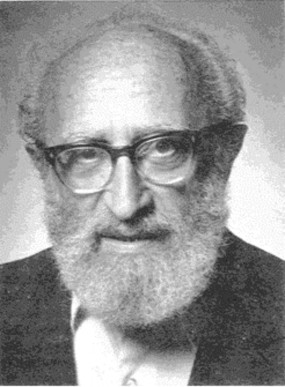
The socialist economists-most prominently Abba Lerner* and Oskar Lange-tried to flip this on its head. Walras’ modeling artifice was what came to be called the “Walrasian auctioneer.” The auctioneer would call out prices. If the markets didn’t clear at those prices, he would adjust them via a “tâtonnement” (“groping”) process until he found the price vector (the vector of the prices of everything in the economy) at which all markets cleared, i.e., the quantity supplied of everything equaled the quantity demanded. This market clearing allocation would be Pareto optimal (i.e,. “efficient”).

Abba Lerner.

Lerner and Lange (which sounds like a Tinpan Alley duo or a pair of movie moguls) seized on this idea, and said that a central planner could set the prices. These prices could achieve a Pareto optimum, and what’s more, could achieve some more socially desirable (by whom?) allocation of goods. A visible hand could do better than the invisible hand. Hence, central planning was not only feasible, it was superior to market outcomes. Alternatively, the central planner could choose Pareto optimal quantities (corresponding to the desired allocation) and let markets clear at the prices implied by them.

Enter von Mises and Hayek. They argued that the modeling abstraction originating with Walras was totally divorced from reality. Most importantly, the information the central planner would require is vast and unobtainable. It is dispersed among millions of economic agents in the form of their preferences (which are different for everybody) and the technical transformation possibilities in the (global!) economy. Much of this information is highly localized. Much of it is tacit and not articulated, but only embodied by “human action” (human choices based on information and their environment).

Frederich von Hayek

In von Mises and Hayek, emergent market processes elicited this information, and market prices summarized this information. For example, by choosing how much to buy at a particular price a consumer reveals information about his preferences. By choosing how much to sell at a particular price a supplier reveals information about cost (which can depend inter alia on tacit knowledge about his production technology). Interactions in markets produces prices at which market clear. These prices aggregate and reveal vast amounts of information about preferences and technologies that no central planner could hope to collect and then act upon.

This pretty much put paid to the socialist calculation debate. The epic failures of communism and socialism (not just in the USSR or Cuba, but in places like India) provided definitive empirical evidence.

Enter AI, and Martin Sandbu. AI can scrape vast amounts of information about prices and quantities. What’s more, “AI offers the promise of transcending price information altogether by predicting who wants, needs or can produce what at what cost, better than market prices could ever summarise.” Spooky behavioral algorithms are evidence, he says, of the uncanny power to uncover individual preferences.

Welcome to the Brave New World!

There are so many factual and intellectual errors in his essay-and indeed, even in the single sentences I reference-to render its conclusions utterly risible, and which make it an impossible labor even to list in detail. So I will just hit a few salient points.

First, even the vast amounts of data AI can collect and organize and presumably use to make decisions represents only a small fraction of the information required to make efficient decisions. For example, yes, we can collect information that is relevant in predicting some individual decisions, e.g., I might be interested in buying a new car, and based on my income, buying history, where I live, etc., AI might be able to predict which cars I prefer. But what about a very fundamental choice: my preference for leisure vs. consumption of goods and services? That is a very personal, internal thing. What’s more, it might change from day to day. And there are many such preferences.

Arguably things are even more complicated on the supply side. In a highly complex modern economy production technologies are incredibly intricate, so intricate that even for a given firm it is a challenge to articulate them. And these two change stochastically. A machine breaks. Someone figures out how to use the machine better. A technical innovation may render the machine obsolete, but the innovation’s actual effects can only be determined through use-“learning by doing”-with said learning being largely tacit, unarticulated, and embodied in the minds of the doers.

Information flows like a river. AI is bound by history-the data (information) it was trained on. It cannot possibly keep up.

The whole literature on the economics of organization is based on the understanding that information in organizations is (a) highly diffuse, and (b) private. Employees know a lot that their employers don’t. Accounting systems and compensation schemes, to mention just two organizational functions, are attempts to elicit information and mitigate the effects of information asymmetry. This testifies to the ubiquity of the issue and the fact that information isn’t just lying about to be collected and collated by a bigger central entity than a firm. If firms struggle to obtain it, why would AI find it a breeze?

Same goes for financial markets. Again, the concepts of private information asymmetric information are fundamental in finance, both in corporate finance and asset pricing. The “price discovery” role of financial markets basically means that trading in financial markets determines prices that aggregate vast amounts of highly dispersed and often tacit pieces of information. Ai trading algorithms may be able to extract some of that information from prices (an “inverse problem”), but absent markets, it cannot access it to determine optimal allocations of capital (a “direct problem”) because it cannot collect this information unless it is produced through human action. It therefore cannot use this information to direct human action.

The problem here goes beyond financial markets. One of the things that Sandbu claims AI can do is “scrape prices” from vast numbers of transactions in order to extract information about preferences and technology. Er, if AI is making resource allocation decisions, those transactions will never occur, and AI can never get that information.

So no Marty, AI will not “bury Hayek.” Yes, it has more information than Gosplan did in the day, but it is still only a sliver of the information that humans use in deciding how to utilize the scarce resources at their disposal.

Electricity provides an interesting illustration. In the past 30 years or so, electricity systems around the world have adopted methods that resemble in crucial ways the type of “market socialism” central planning of Lerner and Lange, and the auctioneer mechanism of Walras. In the US, “Regional Transmission Organizations” or “Independent System Operators” operate centralized auction markets whereby market participants enter offers to supply power and bids to buy it. These are highly granular, given the complexity of electricity. They vary by hour of the day (sometimes down to 5 or 15 minute intervals) and location. The RTO/ISO then put these bids and offers into a mixed linear integer programming algorithm to determine generation schedules and loads. Since fundamentals can change minute-to-minute, the RTO/ISO updates “dispatch” which differs from pre-established schedules.

This is kind of feasible in electricity because the available resources are well known, as are the physics of the grid and the behavior of consumers (e.g., load goes down when the Super Bowl ends because millions of people switch off their TVs). But even here the central planners’/operators’ systems have been plagued by periodic failures, sometimes on an epic scale (e.g., California 1998-2000). Moreover, they face challenges because (a) they still lack much information dispersed among millions of market participants, (b) there are technical issues, like “non-convexities” (one of the issues I alluded to above) that require kludges to mitigate, and (c) the systems can sometimes be gamed.

This last point deserves emphasis. Central planners are in a game with human beings. Human beings will try to figure out and predict–perhaps using AI!–the central planners’ decision rules. They will they see how they can manipulate the rules to defeat the central planners’ purposes.

Put differently. Electricity represents the best case for market-like centralized allocation mechanisms. And even there it poses huge challenges.

Goodhart’s Law also comes into play here. Once the AI measurements become used as inputs to targets, they cease to become effective measurements. That is, their informational value declines. The socialist calculators implicitly assume information is exogenous. It is not, it is endogenous. And changing the system changes the information.

Finally there is a huge issue that Sandbu touches on only indirectly, when he talks about the political aspects of AI central planning. Specifically: determining a better, or more “rational” allocation of resources requires an objective function, a social utility function if you will. In the context of economic history, which of the Pareto optimal allocations in the Edgeworth Box will AI choose? Who determines that objective function?

Rationality in economics involves the choice of means to achieve given ends. Whether a given action is “rational” depends on how you evaluate the ends it achieves.

Which brings us to another fundamental problem with AI Utopia–even assuming the difficulties above could be surmounted (which they can’t, but still). That is: what is the “social welfare function” that a presumed panopticon AI will maximize?

Here Ken Arrow makes another appearance, via the “Arrow Impossibility Theorem,” which proves that there is no such thing as a social welfare (utility) function that meets several basic axioms. Crucially, one of the axioms is that the function is “non-dictatorial.” Yeah, you can have a social welfare function–the dictator’s.

So who gets to be the dictator? Do you want to be subject to his (or her) whims? Or maybe the “dictator” is a democratic polity. Yeah, those are totally “rational.” And then the central planning machinery would be the focus of political battles and rent seeking. And given the stakes, the battle would likely result in violence and oppression.

Oh, and this dictator would have to be global in order to achieve the promised utopia. The UN in charge of all powerful AI. That would be just swell, I’m sure.

I knew–metaphysically knew–that it was inevitable that AI would be advanced as a solution to the Knowledge Problem, and therefore the ultimate innovation that would make socialism possible. (As I recall, early on Daron Acemoğlu mused along these lines-so much the worse for him). All this demonstrates is the superficial understanding these people have of the Knowledge Problem, and of the nature of information-knowledge-in the economy.

The information necessary to allocate resources efficiently is far deeper and far more extensive than AI can collect, let alone analyze. Moreover, even beyond heroically assuming that problem can can be overcome, it creates a fundamental political problem. What will an AI overlord use that information to maximize? What will be its criteria for choosing how to use that information? Whoever determines that will inhabit the pinnacle of power. And we know that struggles for that power are inherently violent and repressive.

* Weird connection here. Lerner taught at Roosevelt University in Chicago. My thesis advisor, Lester Telser, was a Lerner student as an undergraduate in the 1950s. Lester went on to get his doctorate at Chicago, and was definitely NOT a Lernerite. As a grad student I taught some courses at Roosevelt, also weird because it was still a leftist hotbed.

August 16, 2026

Jason Arday’s Enablers and Encouragers Cast the First Stone

Filed under: Politics — cpirrong @ 10:41 am

I had two immediate reactions to the news of Jason Arday’s apparent suicide. The first was sadness, especially for his two children, wife, and parents. The second was to start a countdown to when the left would blame his decision to end his life on those who had uncovered his serial academic misconduct and fabulism. (Uncovering is not quite the right word: it was there in plain sight all along. Having the temerity to point it out is more accurate).

The countdown was a short one. The blaming started almost immediately.

But the blamers should look in the mirror. They are responsible for Arday’s unwarranted rise and are thus responsible for his inevitable fall. They are a necessary condition for the whole sorry tale.

The British academic establishment is the guilty party here. His thesis advisor(s) who granted him a doctorate based on a shoddy thesis: even putting plagiarism aside, its intellectual vacuity, borderline literateness, and sheer sloppiness (apostrophes go wild!) disqualify it even in a notoriously weak field like education. The universities that hired him, and used him to virtue signal despite his obvious lack of scholarly ability and flagrant fabulism: Cambridge is the most guilty here, because the gap between its scholarly reputation and Arday’s scholarly unfitness was the greatest. The university adjacent in media (the BBC in particular) and politics. Supposedly reputable publishers who advanced him seven figures for his Baron von Munchausen-esque autobiography.

Think of the likely effects of this on someone like Arday. What else could he conclude from his treatment other that there was no penalty for academic misconduct; that schlock research on racism got him treated like an academic superstar; and that there was an audience that not only suspended disbelief but avidly gulped down his tall tales? Given that feedback, the natural thing to do is more of it.

Which eventually and inevitably attracted the skeptical attention which brought it all crashing down. His failings were so immense that even his most ardent promoters found them indefensible.

Unless he was totally delusional, Arday must have awakened every day asking: “Is this the day I get called out?” I can only imagine the psychological toll that took. And when that day came, he decided he couldn’t go on.

Of course Jason Arday is ultimately responsible for his choices. But the “elite” enabled those choices, when at every step they should have given him a reality check. And they enabled not because they cared about Jason Arday. It was all about them. To advance their agendas. To validate their intellectual conceits. To feed their vanity.

Decent people would consider their role in Jason Arday’s rise and fall, and repent. But instead, they blame those who would not countenance misconduct–misconduct that they enabled, and indeed encouraged.

July 22, 2026

The Answer to the Data Center Wars is “Get the Prices Right.” Which is a Reason to be Pessimistic About the Outcome

Filed under: AI,Economics,Energy,Politics,Regulation — cpirrong @ 11:10 am

Like the fracking wars, but only much bigger: the current war on data centers. This confict has achieved some notable results, including an outright ban on new data centers in New York, and restrictions even in Texas.

Much of the opposition is organic. Some is astroturfed, and traceable back to China: it provides fertilizer for even of some of the organic growth. As with all these things, a lot of the rhetoric and analysis is fundamentally confused, but there are important economic issues here that deserve serious consideratoin.

First among these is the impact of data centers on power prices. The industry and its backers have pushed back with studies claiming that the impact of data centers is benign, or actually beneficial. For example, an Institute for Energy Research policy paper does a cross sectional analysis of state electricity prices and concludes that states with the highest concentration of data centers do not have higher electricity prices, and that data center penetration is only weakly positively correlated with power price increases.

This is a superficial, not to say stupid, analysis. With respect to the cross section, data center siting is endogenous: developers tend to site in lower cost areas. With respect to time series, a state level analysis is obviously too crude. Furthermore, the analysis does not take into account capacity utilization.

Furthermore, it is based on EIA data on “Average Price of Electricity to Ultimate Customers by End-User Sector.” These are effectively regulated retail rates that roll in historical capital costs, that are effectively fixed costs, meaning that retail costs are based on average costs. As the authors state: “Electricity systems have large fixed costs. If demand increases, those fixed costs are spread over more kilowatt-hours, reduction average costs.”

The problem is that these are backwards looking measures, and that when demand starts pushing towards capacity, those declines in average cost will stop abruptly and be replaced by sharp increases. As Herb Stein famously said, “If something cannot go on forever, it will stop.” And we are at–or even past–the stopping point. Certainly, given projected data center growth, if the stopping point hasn’t been reached, it will be soon. Meaning that hyperscaling will drive up power prices, unless power producing and transmission capacity is increased commensurately.

It has been recognized for some time that the US electricity generation and transmission system is becoming dangerously overstretched. New capacity–reliable capacity (more on this below)–is essential. Data center growth will only stretch the system more.

In the short term, electricity supply curves–the marginal cost curve, which is what is really relevant for pricing–become vertical, or close to vertical. Additions to capacity push out the supply curves. Those additions are vitally needed.

Want evidence? PJM–the Independent System Operator that manages the power grid in the region where much of the largest data center growth has occurred–uses a capacity market to incentivize investment sufficient to meet power demand. Roughly speaking, PJM determines how much capacity is needed to meet anticipated demand, and holds an auction for that quantity. High capacity prices are an indication that capacity is scarce.

Here are the last 5 PJM auction results:

Delivery YearBRA HeldRTO Clearing Price ($/MW-day)Change
2022/20232021$50.00–64%
2023/20242022$34.13–32%
2024/20252023$28.92–15%
2025/2026July 2024$269.92+833%
2026/2027July 2025$329.17*+22%

Oh, 2026/2027 doesn’t look so bad, right? Er, the price hit the FERC-imposed price cap. God only knows what would have cleared the market.

What should you be thinking reading this? Here’s an idea:

Looping back to the study mentioned earlier, the days of declining average cost are over–unless capacity increases to accommodate the higher demand.

The long run effect of data center-induced demand growth on prices depends on the long run supply curve, which depends on a variety of factors, including technology, capital costs, the long run energy supply curve (especially the long run supply curve for natural gas)–and policy.

All but the last of these are largely out of the hands of policymakers. So what policies can make the long run supply curve as flat as possible given these other factors?

Perhaps the most important policy lever is to incentivize efficiently investment in “behind-the-meter” capacity, i.e., vertical integration of new capacity and data centers that will consume the power it produces. This kills a couple of birds. First, it adds to generating capacity. Second, it doesn’t add to the demand for transmission. Given that transmission is the main vulnerability of the grid at present, this is an important consideration.

Some months ago, I analogized an xAI (now SpaceXAI) investment in gas generation co-located with its Memphis data center to mine mouth coal generation plants, and argued that transactions costs considerations provided an incentive for such vertical integration and coordinated co-investment. Those economic considerations apply with data centers, but the electricity market is highly regulated at the state and federal level, and those regulations can affect the incentives for BTM investment.

The crucial issue to provide the appropriate incentives to data center developers. One of the enduring economic lessons that I have learned (from my high school economics teacher, no less) is that a maxim of business success is to “externalize costs, and internalize benefits.” If the costs of connecting a data center to the grid, or the costs of transmission, or other factors that determine the opportunity cost of a BTM investment do not reflect actual costs, developers will have too weak an incentive to vertically integrate because they can externalize their costs. The opportunity cost to colocating generation with a data center is the cost of electricity drawn from the grid. If data centers do not pay the full cost of doing so, they will invest too little in building their own generation.

Data centers don’t want to pay high costs for power, obviously. But if their consumption from the grid is subsidized, they will consume too much from it, and build too little behind the meter capacity.

So, as always: Get the prices right. I say again: Get the prices right. Unfortunately, the politicization of electricity rate setting means that seldom happens.

Some of the biggest subsidies for data centers come from tax benefits granted by states. Just stop. Please. And if you can’t break the habit, limit the subsidies to generating capacity.

The other big policy change that can mitigate the impact of data centers on power prices is to terminate, with extreme prejudice, the monstrosity of “climate crisis”-driven laws and regulations that severely distort incentives to invest in generating capacity. These penalize investment in fossil fuel generation and and encourage investment in renewables. Absent subsidies, renewables are not cheaper than conventional generation. If you want cheaper electricity-where you strip out subsidies in determining cost-reverse these destructive policies.

This is particularly important when one considers that price is not the only relevant consideration here: reliability is too. Greater renewables penetration reduces reliability, all else equal. When you consider the true cost of power, which includes the cost of service interruptions (which can be extreme) and the cost of lower quality power, reliability is an important consideration that has been largely ignored in the force feeding of renewables onto the grid.

Ironically, the unreliability of a grid with a decidedly suboptimal generation mix may encourage behind-the-meter investment. Data centers need reliable power. If they can’t get it from the grid, they’ll decouple from the grid. But there can be too much BTM investment just as there can be too little. Both result from getting the prices (and incentives) wrong.

Some states have responded to impending overwhelming of the grid by data centers in a predicable way: by restricting or stopping altogether data center development. In the case of states like New York this response was foreordained by their previous perverted policy choices which were largely driven by climate hysteria. If they want a long run fix, they need to jettison their hysteria-induced policies.

Will they? As if.

This post has focused on power. Another sensitive issue is water. I don’t know much about the technical issues involved here, so I’ll just make one observation. Markets for water don’t exist, for all practical purposes. It’s almost certain that the prices are wrong. Meaning that it is almost certain that data center water consumption is inefficient. Knowing that doesn’t require knowing anything about the technology.

Unfortunately, it is necessary to remember Chesterson’s Fence in this context. That is, to ask “why aren’t there markets for water?” The answer is ultimately a political one, and as a result hopes for a market-based water pricing mechanism are in vain. Meaning that concerns about data center water consumption are likely to be addressed with a meat cleaver–no data centers!–or not at all–go ahead, build what you want! The discriminating, balancing decisions about water consumption that would occur when water is at least remotely priced correctly will therefore not occur, and the water issue will become a bone of political contention.

In sum, the correct approach to the data center war is Econ 101: GET THE PRICES RIGHT. The prices of connecting to the grid. The price of transmission. The price of energy. The price of reliability. The price of water.

And that’s why I am pessimistic about the ultimate outcome of this war. The products involved-power and water-are highly regulated and highly politicized. Regulation and politicization are inimical to getting prices right. Regulation and politicization were not imposed by aliens. They are the equilibrium outcome of political processes that are unlikely to change. Furthermore, the political salience of energy prices in an era in which “affordability” has heightened political valence means that pricing perversities are likely to get worse, not better.

Sorry to break it to you. But you probably didn’t come here to get sunshine blown up your backside.

July 5, 2026

These Are Not My Great Grandfather’s Socialists: They Are A Vicious, America-Hating Lumpen Bourgeoisie

Filed under: Politics — cpirrong @ 4:05 pm

I have a confession. There is a skeleton in my family closet: my great grandfather was a socialist.

And not a barstool, lip service socialist either. A full-on, politically active one. He was an elector for Eugene V. Debs in the 1912 presidential election. The Socialist Party had sounded him out as a potential gubernatorial candidate for Ohio in that election.

He idolized Debs. My grandmother recalled how he would employ his skills as a former concert coronetist to attract crowds in Marietta, Ohio. He would set up on a downtown street corner and play his coronet with my 8 year old grandmother singing accompaniment. When a crowd gathered, he would launch into a speech lauding Debs and socialism.

I don’t know whether he converted anyone. I do know that he didn’t persuade my grandmother. She said “I adored my father, but even when I was 8 I knew socialism was for the birds.”

My great grandfather’s era was America’s first serious brush with socialism. We are now experiencing another. I sometimes wonder now what Frank Martin would have thought about Zohran Mamdani and his ilk. I am guessing one could say Mamdani is not my great grandfather’s socialist.

The most important distinction is that the core of the Debs era socialist support was manual laborers, whereas today’s DSA crowd consists mainly of lumpen bourgeoisie who have never performed physical labor in their lives, and shudder at the thought. Many are largely over credentialed, under educated intellectualoids infuriated at their marginal economic circumstances and the burden of student debt incurred to obtain unmarketable credentials. They are intellectual dilettantes, and living embodiments of Dunning-Kruger Syndrome, midwits convinced of their intellectual and moral superiority outraged that their social status and income falls far short of their lofty (but totally unrealistic) expectations. Rather than blame their bad choices, they attack the system that made those choices possible.

Schumpeter would understand.

In brief. 1912: swingers of hammers and machine operators. 2026: Starbucks baristas and NGO hangers on.

Another core 2026 socialist constituency is America-hating immigrants, of whom Mamdani is an exemplar. There is no better illustration of this than his 3 July speech, infuriatingly delivered while sitting at George Washington’s desk. It was a jeremiad (or more accurately a jihad-miad) against America and capitalism.

Here is a man who achieved prominence in America, pissing on the hand that raised him up. Slandering America sitting at the desk of a far, far greater man on the eve of the country’s most important civic holiday. Indeed, on the eve of the 250th anniversary of the Declaration of Independence.

He should have been at Khamenei’s funeral instead. They have “death to America” in common.

And he’s not the worst. Take his wife. Please. Or Democratic Congressional primary winner Darializa Avila Chevalier, who drips hatred towards this country. I could go on.

The new socialists are also obsessed with “Palestine” and hate Israel. The new socialists are hardcore anti-semites (using “anti-Zionism” as a Trojan Horse). indeed, it is the main thing that differentiates them from the progressives whom they have vanquished in primaries. Old school socialists not so much.

Remember what Lenin said: “Anti-semitism is the socialism of fools.” And a la Lenin, the new socialists are truly fools.

As I noted not long ago, these socialists represent the energy in the Democratic Party, with Chevalier being just one candidate who vanquished extremely progressive incumbents. And other Democrats are bending the knee and kissing the ring, e.g., Kamala Harris reaching out to Mamdani. Or “Bill Clinton” posting a letter that mimics Mamdani’s screed:

I put “Bill Clinton” in quotes because he has been in public recently about as often as Mojtaba Khamenei, and when he has appeared he is clearly seriously mentally and physically diminished. So I strongly suspect that Hillary put this out in his name.

I could possibly take encouragement at this development. These people and their doctrine are poisonous. Their cause has a litany of abject failures stretching back more than a century. One may give my great grandfather a pass because the fatal defects of his doctrine had not been demonstrated by hard experience when he was expounding them. Today’s socialists have no such excuse. The history of socialism since 1917 is a trail of tears of poverty and death.

Certainly Americans–at least a majority thereof–will recognize this, and reject the new socialists outside of the lumpen bourgeois precincts of blue cities right?

But I am not so sure, especially since recent polls demonstrate widespread sympathy for socialism, especially among Democrats and the young, among whom a majority are supporters. The hysteresis of party loyalty, antipathy towards Trump, and the typical dynamics of midterm elections make it not improbable, and arguably probable, that in November Democrats will secure control of the House, and perhaps the Senate. In the event, the socialists will claim credit, and demand their due.

And that, my friends, is a dire prospect.

Next Page »

Powered by WordPress