AI hysteria has predictably led to calls to regulate! regulate! regulate!, seemingly from all corners except for the Trump administration and NVIDIA’s Jensen Huang. Those baying for “regulation” include frontier model leaders Anthropic and OpenAI.
I put “regulation” in quotes because as is often the case, those calling for regulation are imprecise on just what regulation should entail, and have evidently given little serious consideration to how regulation works in practice. The word is usually more of a magic incantation than a description of something real that has any chance of realizing the goals of those using it.
So what should AI regulation look like? To answer that question, it’s important to start at the basics.
Decades ago Steve Shavell wrote two important articles that speak to the subject: “Liability for Harm Versus Regulation of Safety” (JLE, 1984) and “The Optimal Structure of Law Enforcement” (JLS, 1993). Shavell laid out several criteria for determining the best way to regulate.
Broadly speaking, there are two alternative methods of regulation. Harm-based (“ex post“) sanctions that attempt to deter harmful conduct, and preventative (“ex ante“) regulations. The former includes the common law tort system, and civil and criminal laws. The latter includes things like government approval for the sale of a product, with FDA approval of drugs being an example. Many of the calls to regulate AI fall in the latter category, and some members of the Trump administration basically advocate the former.
So which is best here?
Shavell identifies several factors that determine the optimal legal structure. On balance, these favor ex post/harm-based tort-like approaches.
The first criterion is “is the possibility of a difference in knowledge about risky activities as between private parties and a regulatory authority.” That is, information asymmetry between the regulator and the regulated.
This is quite intuitive. If an actor (an AI firm, in this instance) has better information about the likelihood its actions will cause harm, and the amount of harm it will cause than does a regulator, if it knows it will pay damages commensurate with the harm it causes, it can take the efficient precautions. It will appropriately trade off the cost of mitigating harms (including the cost associated with reduced performance) with the cost of the harms because the prospect of paying damages based on costs and probabilities of harms will induce it to internalize the costs of its actions.
In contrast, an ignorant regulator knows less about the probabilities and magnitudes, and is therefore likely to implement measures that are either overinclusive or underinclusive. That is, regulators are far more prone to Type I and Type II errors.
It is clearly the case with AI that the developers-the labs/frontier firms in particular-will be far better informed about their creations and the risks that they pose than any government regulator would be.
Shavell’s second criterion is “that private parties might be incapable of paying for the full magnitude of harm done.” That is, in the present context, an AI firm might be “judgment proof.” In the event, the actor will not internalize the costs it imposes on third parties, and will tend to take excessive risks and impose excessive harms. Here, external interventions that constrain actions in order to reduce the magnitude and frequency of harms can be superior to deterrence.
The inability to impose monetary damages commensurate with harms is one justification for criminal sanctions, including imprisonment or even execution. These are non-monetary penalties that enhance deterrence.
This is one factor that might-might-favor ex ante regulation. Anthropic or OpenAI (or any other firm) could not pay damages commensurate with harm if that harm is the end of humanity!
But this brings us back to the first issue. In deciding whether judgment proofness is indeed a problem, we need to have some assessment of the distribution of harms, and here the AI firms have a decisive information advantage. And as I discuss below, we absolutely cannot take at face value the pronouncements of Amodei, Altman, Musk, et al, on the potential harms posed by AI, or their likelihood.
And more, even though judgment proofness may preclude AI firms from fully internalizing costs of their products (especially the harms they may create), bureaucrats operating subject to low powered incentives clearly don’t internalize them. Nor do they internalize the benefits of more capable AI. Therefore, although judgment proofness may be a necessary condition for ex ante regulation, it is not a sufficient one.
Shavell’s third factor is “the chance that parties would not face threat of suit for the harms done.”
In the US legal system? As if! Indeed, the likely bigger problem with relying on the tort system to deter would lead to suits for harms not done, i.e., frivolous or baseless litigation.
Shavell’s last factor is the relative administrative costs of the two systems, i.e., the cost of a regulatory bureaucracy vs. the costs of litigation.
Both litigation and bureaucracy are costly. The advantage of ex post, harm-based regulation is that the litigation costs are only incurred when a harm incurs: no harm, no foul, no legal expense (with the caveat related to frivolous litigation mentioned above). In contrast, the bureaucracy must be fed continuously, even in the absence of harms.
And note that regulation would necessarily have to be international in scope. Look at the post-Great Financial Crisis history of banking and financial regulation for a demonstration of the monumental costs and challenges of international regulation. AI regulation would put even that in the shade, especially since it adds China and strategic competition into the mix.
To which, I would add another factor: influence costs, including regulatory capture. It is well known that the regulated exploit their information advantages and financial resources to induce regulators to take actions that benefit some regulated entities, at the expense of other entities and the public at large. This is especially likely to work when the regulated have a big information advantage (check) and a lot of money (check).
Overall, to me the scorecard tilts heavily in favor of ex post, harm-based, liability mechanisms as opposed to ex ante regulation. This is especially true given the radical uncertainty and information asymmetries inherent in such a dramatically new technology. We are learning the harms as we go, and the developers learn more and faster than any bureaucrat can. Indeed, being liable for harms gives the developers a strong incentive to identify those potential harms-their magnitudes and likelihoods. A far stronger incentive than bureaucrats have.
And that provides a segue into a discussion of one of the most fascinating aspects of the ongoing debate/hysteria: the fact that the frontier labs are the loudest and most strident voices calling for regulation. In my opinion, this is overdetermined.
A major reason is that Anthropic et al are deathly afraid of being liable for the harms their products cause. Palantir’s Alex Karp perhaps overstates the case when he says they are effectively calling for nationalization in order to avoid liability, but I think it’s pretty clear that avoiding paying for the harms their products cause is a major driver behind the calls–pleas, really–for regulation.
Which, to be honest, another reason to favor a liability-based system. It suggests they understand that even precluding the end of the world or singularity scenarios, they are aware that their products can do great damage. The only way to get them to act on this knowledge is to force them to pay the costs, and not be able to say “don’t look at me! The regulators approved what I did!”
Another reason-the one that has received most commentary-is that the frontier firms know that they would be able to capture their regulator(s) by exploiting their information advantage and vast wealth. And as George Stigler pointed out long ago, the biggest benefit a regulator can bestow on its industry masters is a reduction in competition, including by the erection of entry barriers. As I’ve written with respect to financial regulation, regulatory costs are largely fixed and therefore benefit large incumbents at the expense of new, smaller, disruptor entrants.
There is another reason that is laid bare by some of the specific rhetoric and actions of Amodei, Altman, et al: a belief that intense competition between the frontier firms, let alone between them and open weight models, small models, etc., will be ruinous to them.
The cabal has been negotiating in public for “pacing,” i.e., a coordinated slowdown of model development. Competition on the capability dimension is hugely expensive, especially with respect to training. I view the various public statements-including the apocalyptic rhetoric justifying a slowdown-to be “cheap talk” intended to coordinate reduced investment. A way of cartelizing the industry.
Which leads to another motive for favoring regulation–protection from antitrust laws.
A coordinated slowdown would also address something else that I think looms over them. The whole AI sector is a bet on future demand, future prices (which depend on demand and competition from non-frontier implementations), the costs of production (e.g., data center investment and operational costs, including notably electricity), and the execution timeline (e.g., will bringing data centers online be delayed by supply chain bottlenecks or local political opposition?) Doubts have been increasing on all these dimensions, and I strongly suspect that the industry insiders fear that their massive investments (at all levels of the value chain) will not pay off if the current pace and growth are maintained. That is, the “pause” is not driven by safety fears, but by fears of a financial bloodbath.
It reminds me of Stalin’s pausing collectivization because he was “dizzy with success.” AI has been so successful that it has led to dizzying excesses that need to be reined in.
So there are many reasons for AI executives to want a pause. I think all are operative, and all push in the same direction–regulation by means other than liability.
But the nature of the industry and the product and the economics of harm reduction mean that a liability mechanism is the best way to address the safety concerns surrounding AI. That mechanism would give AI developers the strongest incentive to control the risks that they lecture us about daily. Anthropic doesn’t need OpenAI to mitigate the risks of its models, and vice versa. Internalize costs via a liability system and they will unilaterally have the incentive to do so.
Back when AI began to emerge as the Next Big Thing, I asked myself “how long until some idiot comes along and says AI will permit efficient, rational central planning because it solves the Knowledge Problem.” Well, the day has arrived and found its idiot: Martin Sandbu in the Financial Times.
Sandbu at least correctly frames the issue in the context of a long-ago debate that is largely forgotten (something that he acknowledges): the Socialist Calculation Debate of the interwar years (that extended into the 1940s: Hayek’s seminal paper that largely settled the controversy was published in 1945).
In many respects the debate was a very abstruse one that was rooted in the technical economics of the era. Starting with Leon Walras, it was shown that under certain technical assumptions (some of which I will get back to), prices in a competitive economy would lead to an “efficient” (i.e., Pareto optimal) allocation of resources. But there are many Pareto optimal allocations, with very different distributive consequences (c.f., “the Edgeworth Box”).
This was held out as a demonstration of the truth in Adam Smith’s idea of an “invisible hand.” Years later the mathematical rigor of the idea was strengthened greatly by Arrow and Debreu and the theory of general equilibrium that led to the First and Second Theorems of Welfare Economics, showing the duality between competitive equilibrium and Pareto optimality.
The socialist economists-most prominently Abba Lerner* and Oskar Lange-tried to flip this on its head. Walras’ modeling artifice was what came to be called the “Walrasian auctioneer.” The auctioneer would call out prices. If the markets didn’t clear at those prices, he would adjust them via a “tâtonnement” (“groping”) process until he found the price vector (the vector of the prices of everything in the economy) at which all markets cleared, i.e., the quantity supplied of everything equaled the quantity demanded. This market clearing allocation would be Pareto optimal (i.e,. “efficient”).
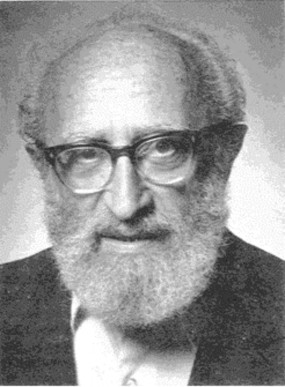
Abba Lerner.
Lerner and Lange (which sounds like a Tinpan Alley duo or a pair of movie moguls) seized on this idea, and said that a central planner could set the prices. These prices could achieve a Pareto optimum, and what’s more, could achieve some more socially desirable (by whom?) allocation of goods. A visible hand could do better than the invisible hand. Hence, central planning was not only feasible, it was superior to market outcomes. Alternatively, the central planner could choose Pareto optimal quantities (corresponding to the desired allocation) and let markets clear at the prices implied by them.
Enter von Mises and Hayek. They argued that the modeling abstraction originating with Walras was totally divorced from reality. Most importantly, the information the central planner would require is vast and unobtainable. It is dispersed among millions of economic agents in the form of their preferences (which are different for everybody) and the technical transformation possibilities in the (global!) economy. Much of this information is highly localized. Much of it is tacit and not articulated, but only embodied by “human action” (human choices based on information and their environment).
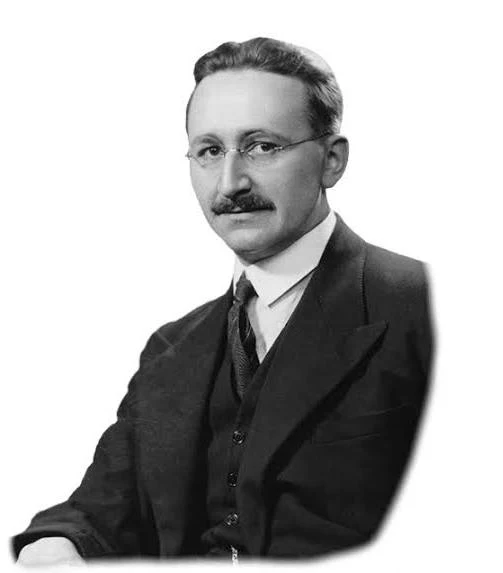
Frederich von Hayek
In von Mises and Hayek, emergent market processes elicited this information, and market prices summarized this information. For example, by choosing how much to buy at a particular price a consumer reveals information about his preferences. By choosing how much to sell at a particular price a supplier reveals information about cost (which can depend inter alia on tacit knowledge about his production technology). Interactions in markets produces prices at which market clear. These prices aggregate and reveal vast amounts of information about preferences and technologies that no central planner could hope to collect and then act upon.
This pretty much put paid to the socialist calculation debate. The epic failures of communism and socialism (not just in the USSR or Cuba, but in places like India) provided definitive empirical evidence.
Enter AI, and Martin Sandbu. AI can scrape vast amounts of information about prices and quantities. What’s more, “AI offers the promise of transcending price information altogether by predicting who wants, needs or can produce what at what cost, better than market prices could ever summarise.” Spooky behavioral algorithms are evidence, he says, of the uncanny power to uncover individual preferences.
Welcome to the Brave New World!
There are so many factual and intellectual errors in his essay-and indeed, even in the single sentences I reference-to render its conclusions utterly risible, and which make it an impossible labor even to list in detail. So I will just hit a few salient points.
First, even the vast amounts of data AI can collect and organize and presumably use to make decisions represents only a small fraction of the information required to make efficient decisions. For example, yes, we can collect information that is relevant in predicting some individual decisions, e.g., I might be interested in buying a new car, and based on my income, buying history, where I live, etc., AI might be able to predict which cars I prefer. But what about a very fundamental choice: my preference for leisure vs. consumption of goods and services? That is a very personal, internal thing. What’s more, it might change from day to day. And there are many such preferences.
Arguably things are even more complicated on the supply side. In a highly complex modern economy production technologies are incredibly intricate, so intricate that even for a given firm it is a challenge to articulate them. And these two change stochastically. A machine breaks. Someone figures out how to use the machine better. A technical innovation may render the machine obsolete, but the innovation’s actual effects can only be determined through use-“learning by doing”-with said learning being largely tacit, unarticulated, and embodied in the minds of the doers.
Information flows like a river. AI is bound by history-the data (information) it was trained on. It cannot possibly keep up.
The whole literature on the economics of organization is based on the understanding that information in organizations is (a) highly diffuse, and (b) private. Employees know a lot that their employers don’t. Accounting systems and compensation schemes, to mention just two organizational functions, are attempts to elicit information and mitigate the effects of information asymmetry. This testifies to the ubiquity of the issue and the fact that information isn’t just lying about to be collected and collated by a bigger central entity than a firm. If firms struggle to obtain it, why would AI find it a breeze?
Same goes for financial markets. Again, the concepts of private information asymmetric information are fundamental in finance, both in corporate finance and asset pricing. The “price discovery” role of financial markets basically means that trading in financial markets determines prices that aggregate vast amounts of highly dispersed and often tacit pieces of information. Ai trading algorithms may be able to extract some of that information from prices (an “inverse problem”), but absent markets, it cannot access it to determine optimal allocations of capital (a “direct problem”) because it cannot collect this information unless it is produced through human action. It therefore cannot use this information to direct human action.
The problem here goes beyond financial markets. One of the things that Sandbu claims AI can do is “scrape prices” from vast numbers of transactions in order to extract information about preferences and technology. Er, if AI is making resource allocation decisions, those transactions will never occur, and AI can never get that information.
So no Marty, AI will not “bury Hayek.” Yes, it has more information than Gosplan did in the day, but it is still only a sliver of the information that humans use in deciding how to utilize the scarce resources at their disposal.
Electricity provides an interesting illustration. In the past 30 years or so, electricity systems around the world have adopted methods that resemble in crucial ways the type of “market socialism” central planning of Lerner and Lange, and the auctioneer mechanism of Walras. In the US, “Regional Transmission Organizations” or “Independent System Operators” operate centralized auction markets whereby market participants enter offers to supply power and bids to buy it. These are highly granular, given the complexity of electricity. They vary by hour of the day (sometimes down to 5 or 15 minute intervals) and location. The RTO/ISO then put these bids and offers into a mixed linear integer programming algorithm to determine generation schedules and loads. Since fundamentals can change minute-to-minute, the RTO/ISO updates “dispatch” which differs from pre-established schedules.
This is kind of feasible in electricity because the available resources are well known, as are the physics of the grid and the behavior of consumers (e.g., load goes down when the Super Bowl ends because millions of people switch off their TVs). But even here the central planners’/operators’ systems have been plagued by periodic failures, sometimes on an epic scale (e.g., California 1998-2000). Moreover, they face challenges because (a) they still lack much information dispersed among millions of market participants, (b) there are technical issues, like “non-convexities” (one of the issues I alluded to above) that require kludges to mitigate, and (c) the systems can sometimes be gamed.
This last point deserves emphasis. Central planners are in a game with human beings. Human beings will try to figure out and predict–perhaps using AI!–the central planners’ decision rules. They will they see how they can manipulate the rules to defeat the central planners’ purposes.
Put differently. Electricity represents the best case for market-like centralized allocation mechanisms. And even there it poses huge challenges.
Goodhart’s Law also comes into play here. Once the AI measurements become used as inputs to targets, they cease to become effective measurements. That is, their informational value declines. The socialist calculators implicitly assume information is exogenous. It is not, it is endogenous. And changing the system changes the information.
Finally there is a huge issue that Sandbu touches on only indirectly, when he talks about the political aspects of AI central planning. Specifically: determining a better, or more “rational” allocation of resources requires an objective function, a social utility function if you will. In the context of economic history, which of the Pareto optimal allocations in the Edgeworth Box will AI choose? Who determines that objective function?
Rationality in economics involves the choice of means to achieve given ends. Whether a given action is “rational” depends on how you evaluate the ends it achieves.
Which brings us to another fundamental problem with AI Utopia–even assuming the difficulties above could be surmounted (which they can’t, but still). That is: what is the “social welfare function” that a presumed panopticon AI will maximize?
Here Ken Arrow makes another appearance, via the “Arrow Impossibility Theorem,” which proves that there is no such thing as a social welfare (utility) function that meets several basic axioms. Crucially, one of the axioms is that the function is “non-dictatorial.” Yeah, you can have a social welfare function–the dictator’s.
So who gets to be the dictator? Do you want to be subject to his (or her) whims? Or maybe the “dictator” is a democratic polity. Yeah, those are totally “rational.” And then the central planning machinery would be the focus of political battles and rent seeking. And given the stakes, the battle would likely result in violence and oppression.
Oh, and this dictator would have to be global in order to achieve the promised utopia. The UN in charge of all powerful AI. That would be just swell, I’m sure.
I knew–metaphysically knew–that it was inevitable that AI would be advanced as a solution to the Knowledge Problem, and therefore the ultimate innovation that would make socialism possible. (As I recall, early on Daron Acemoğlu mused along these lines-so much the worse for him). All this demonstrates is the superficial understanding these people have of the Knowledge Problem, and of the nature of information-knowledge-in the economy.
The information necessary to allocate resources efficiently is far deeper and far more extensive than AI can collect, let alone analyze. Moreover, even beyond heroically assuming that problem can can be overcome, it creates a fundamental political problem. What will an AI overlord use that information to maximize? What will be its criteria for choosing how to use that information? Whoever determines that will inhabit the pinnacle of power. And we know that struggles for that power are inherently violent and repressive.
* Weird connection here. Lerner taught at Roosevelt University in Chicago. My thesis advisor, Lester Telser, was a Lerner student as an undergraduate in the 1950s. Lester went on to get his doctorate at Chicago, and was definitely NOT a Lernerite. As a grad student I taught some courses at Roosevelt, also weird because it was still a leftist hotbed.
It’s a story as old as time. An allegedly genius investor has a winning streak, which burnishes his genius image even more. He starts to believe it. Levers up. Then the wave he was riding crests and falls, the iron logic of leverage exerts itself. He becomes illiquid-if not insolvent-and either goes bust or gets bought out. And he’s no longer a genius, but an excuse maker.
One particularly famous example of this is Long Term Capital Management. LTCM had bona fide geniuses, Nobel Prize winners Myron Scholes and Robert Merton. Their genius apparently paid off for quite a while, with LTCM showing stellar risk-adjusted returns. Then, you know, stuff happens. Stuff like Russia effectively defaulting on its debt. Then your supposedly uncorrelated trades become suddenly correlated, and all start going in the wrong direction.
All that leverage that amped your returns now turns on you with a vengeance, and amps your losses. What’s more, your success has allowed you to grow to the point where you effectively are the market, which (a) moves the markets strongly against you when you try to liquidate some positions to meet margin calls and/or reduce leverage, and (b) pushes up the correlations even more.
Then, you are transformed from Golden Child to Systemic Problem Child. In LTCM’s case, it was so large that the Fed had to intervene to coordinate a liquidation of its positions into the tender loving care of the likes of Goldman.
Fast forward 28 years. The Golden Child and putative genius is Leopold Aschenbrenner, head of the oh-so-ironically named Situational Awareness hedge fund. The soi disant “Nostradamus of AI” implemented the picks-and-provisions strategy in the AI space, investing heavily in stocks of companies that provide the inputs to data centers and other AI-related activities. (SA also has private investments in AI firms like Anthropic).
He did time his entry right, and rode prices upwards. He (sound familiar?) amped his returns through extensive leverage (reputedly 4x). But-and there’s usually a but-the market peaked, and began to drop. And as has happened time and time again (it wasn’t just LTCM) the iron logic of leverage took over. Wrong way market moves beget margin calls on leveraged positions. Margin calls mean cash. Mark-to-market paper gains aren’t cash. So the imperiled fund was forced to sell positions to raise money-which only exacerbated the price declines.
Worse, the financial distress of a big position holder can’t be kept a secret. Evidently many others were apparently more situationally aware than Situational Awareness, and started to unload positions in stocks in which it was heavily invested. This front running exacerbated the price declines, and hence severely leveraged SA’s distress.
It happened so fast!, Aschenbrenner is no doubt thinking.
Sure did, (ex) Golden Child. Leverage comes at you fast.
And so do sharks. Jane Street, Millennium, and Citadel circled. In a single night, the last of these negotiated a deal to acquire all of SA’s publicly traded holdings at a discount estimated to be 10 percent.
The markets breathed a collective sigh of relief when news of Citadel’s purchase eliminated fears of a dumping of SA’s shares on the market: tech stocks rallied on the news.
Though no doubt his motives were purely self-interested, and are not as public spirited as J. P. Morgan’s intervention in the Panic of 1907, Citadel’s Ken Griffin did the markets a big favor. It is not from the benevolence of the butcher, the brewer, or the baker–or the hedge fund mogul–etc. (NB: I am not a reflexive Ken Griffin fan, as this old post demonstrates).
But as the saying goes, no good deed goes unpunished. Many-mostly Leopold fanboyz apparently-have argued that Griffin plotted SA’s demise (a reprise of CZ and SBF, maybe) by releasing a note predicted a Fed rate increase some time before the last Fed meeting. When the Fed did meet, and held rates steady-not raise them, mind you-the markets dropped, delivering the coup de grace to SA’s strategy that was already bleeding profusely. So per the fanboyz: See! Citadel caused this and then swooped in to take advantage!
Er, no. SA was already teetering. Citadel’s prediction-wrong, in the event-did not cause the final, fatal sell off. The Fed did.
For his own part, in a letter to investors Aschenbrenner rounded up the usual suspect-short sellers! It’s kind of pathetic. I have more respect for the natural gas fund operator who gave a blubbering, cringing apology when his widow maker strategy imploded.
If you are looking for other culprits here-beyond Aschenbrenner-look at SA’s prime brokers. Why did they supply so much leverage to back a poorly diversified strategy focused on a sector where sentiment had started to turn prior to the initial declines?
And if you want to do an It’s a Wonderful Life homage and wonder what would have happened if Ken Griffin/Citadel hadn’t been born, look at the disastrous unwind of another highly leveraged hedge fund-Archegos. Another example of an undiversified, highly leveraged fund caught in a doom loop when the markets turned against it.
In that instance, its prime brokers got together and agreed to assume the fund’s positions, and undertake a controlled liquidation. So far, so good. But one of them-Morgan Stanley-played “defect” in the prisoners’ dilemma facing the PBs, and sold $5 billion of Archegos’ holdings. Then the others jumped in and a full-scale fire sale occurred, leaving all the PBs badly singed. With Morgan Stanley (a la Margin Call) coming out best by getting out first (and not telling its counterparties what it knew about Archegos’ impending demise).
One firm-Citadel in this instance-didn’t face a prisoner’s dilemma. It-with the support of SA’s prime brokers-took the whole portfolio. Fire sale averted-to the markets’ relief (as noted above).
In sum, the Situational Awareness story is news, but not news. It is a story that has been repeated many times in many places. Leverage makes you look like a genius when the markets move your way. But with probability bounded away from zero, it will kill you when the market turns.
Perpetual futures are all the rage these days. Few things in the futures space have attracted as much attention as “perps,” in particular in the aftermath of a surge in crude oil perpetual futures trading on Hyperliquid over the weekend when the US and Israel unleashed their bombing campaign against Iran–a time when the major exchanges were closed. Below is a policy piece I prepared for ICE that examines the economics of perps. The basic conclusion: they are suitable primarily for a retail trading niche which represents a small fraction of incumbent exchanges’ business.
The Economics of Perpetual Commodity Futures
Introduction
Perpetual futures (“perpetuals” or “perps”) were developed initially to solve specific security problems in trading cryptocurrency (“crypto”). From their birthplace in the crypto markets, perpetual futures have moved into the trading of virtually every major asset class, including inter alia equities, equity indices, and currencies. And now they are making inroads into commodities like oil and corn. The Iran War triggered broader awareness of this latter trend: the volume of a crude oil perpetual futures contract traded on Hyperliquid soared to $1.7 billion with the onset of the war.[1]
This, in turn, has sparked considerable debate over how perpetual futures will affect the traditional conventional commodity futures markets, including ICE and the CME. Herein I present an economic analysis of perpetual futures. [2] The primary conclusions are:
Due to their design, perpetual futures are ill-suited for market participants who account for a preponderant share of trading on incumbent exchanges. These are large commercial and financial entities who use traditional futures contracts to transfer risk. Crucially, the spot price mimicking structure of perpetual futures does not align with the risks that commercial hedgers manage.
Instead, perpetual futures are tailored to small “retail” traders. As a result, perpetual futures are likely to be a niche product that is attractive to this clientele.
The competitive impact of perpetual futures on commodity derivatives markets will depend on whether these contracts attract retail volume from incumbent exchanges, or instead disproportionately attract traders who would not trade on these exchanges.
Commodity Perpetual Futures
Perpetual futures emerged in the cryptocurrency market to solve a particular problem: recurrent thefts of cryptocurrency held by exchanges trading actual crypto (“spot exchanges”).[3] Introduced by BitMEX in 2013, perpetual futures avoided the security issues that had plagued spot exchanges because they were cash-settled instruments that did not allow, require, or countenance the delivery of crypto assets, or the custody thereof.
Incumbent crypto exchanges traded crypto assets on a spot basis, in much the same way that the NYSE or Nasdaq trade equities on a spot basis. Perpetual futures were designed to mimic spot trading but to avoid the security issues just described. Specifically, with perpetual futures, on a periodic basis throughout the day a perpetual futures exchange determines a price from an “oracle” that takes the prices from spot exchanges. The perpetual futures exchange then compares the price of its perpetual contract (for Bitcoin, say) to the price derived from the oracle. If the prevailing price on the exchange’s perpetual diverges from the oracle price (a measure of the spot price of the instrument), the exchange determines a “funding rate.” If the perpetual price is above the oracle price, the contract long pays the funding rate, and the short receives a funding rate payment.
This is intended to, and has the effect of, causing the perpetual price to track the spot price prevailing on spot exchanges. A perpetual price above the spot price incentivizes sale of the perpetual to capture the funding payment, thereby driving the price: conversely, a perpetual price below the spot price incentivizes a purchase of the perpetual, again to capture the funding payment, thereby driving up the price. These sales and purchases tend to drive the perpetual price towards the spot price, thereby causing the perpetual price to track spot prices closely. In this way, a perpetual futures trader can obtain exposure to the underlying spot price as could be obtained directly on a spot exchange, but without the security risks posed by trading on a spot exchange.
Market participants soon realized that perpetual futures offered other advantages.
First, unlike conventional futures contracts, perpetual futures have no fixed expiration date. Thus, whereas trading traditional futures requires those who wish to hold a position over a contract expiration date must “roll” these positions on or before the expiration date, this is unnecessary for a perpetual future. For example, with conventional futures, a long must sell the expiring contract and buy a later-expiring contract to maintain a long position, whereas a trader long the perpetual need not do anything. This economizes on transactions costs.
Second, like futures but unlike spot transactions, perpetual futures incorporate leverage. For example, perpetual exchanges offer 10x, 20x, and sometimes as much as 50x leverage.
Third, like conventional futures, perpetual futures are easier to short than actual cryptocurrencies.
Fourth, perpetual futures offer 24×7 trading. In contrast, at present, conventional exchanges trade for less than 24 hours a day, and on weekdays.
As a result of these various features, perpetual futures have come to dominate crypto trading. A recent JP Morgan study estimates that perpetuals account for 90 percent of crypto derivatives trading (with conventional futures traded on exchanges like the CME representing the rest), and that perpetual futures volumes exceed spot exchange volumes.
Perpetual futures differ from conventional futures in other ways. Unlike conventional futures traded on ICE or CME, many perpetual futures are not centrally cleared.
Moreover, and relatedly, perpetual futures often have an “auto-liquidation” feature. As an example, on Hyperliquid, as on a traditional cleared market, the exchange sets an initial margin level and a maintenance margin level: these levels effectively determine leverage, with lower margins being associated with higher leverage. If the market moves against a trader and the loss drives the trader’s account equity below the maintenance margin level, Hyperliquid reduces or closes the position by engaging submitting an offsetting market order into the exchange limit order book, for example, selling when a long’s account equity is insufficient.[4] If the trader’s equity falls below two-thirds of the maintenance margin level, the position is transferred to a “Liquidation Vault,” which essentially internalizes the offsetting transaction.[5] In extreme circumstances, when the market liquidation fails and the Liquidation Vault cannot safely absorb the position loss, the exchange may trigger “Auto-Deleveraging,” whereby profitable positions on the opposite side of the market can have their positions reduced. This is effectively a “tear up” procedure.
Auto-liquidation mitigates credit risk in leveraged instruments, but can have destabilizing effects. For example, a large price increase likely results in large auto-liquidations of short positions, which tends to cause prices to increase further. In the case of perpetual futures, the price change will manifest itself primarily in the form of an increased spread between the perpetual price and the spot price it is intended to track, leading to large funding payments that require access to funding liquidity. Liquidity strains can exacerbate this mechanism.[6]
Commodity Perpetual Futures
Although perpetual futures developed in crypto markets to address crypto-specific problems, their market success has spurred the extension of the concept to a wide variety of other underlying instruments, most notably commodities such as crude oil. With respect to commodities specifically, perpetual futures differ in salient dimensions from crypto perpetual futures and even perpetual futures on other non-crypto-underlyings, such as equity indices.
There is one overriding reason for this difference: there are no transparent and liquid spot markets as there are for cryptocurrencies and many other financial assets. Thus, it is impossible to create commodity perpetual futures that track (as a result of funding payments) a spot commodity price, because for all practical purposes such a thing does not exist.
Instead, existing commodity perpetual futures are designed to track the prices of liquid futures contracts, such as CME NYMEX WTI Crude Oil Futures and ICE Brent Crude Oil Futures. With that difference, commodity perpetual futures operate similarly to the crypto perpetuals described above.
Specifically, a perpetual futures exchange obtains the price of the futures it is tracking from an oracle, and sets funding payments based on the difference between the perpetual futures price and the oracle price. For example, on 3 August 2026, Hyperliquid receives the price of September 2026 WTI Crude Oil Futures on an hourly basis from its oracle.[7] As described above, it determines a funding payment based on the difference between the WTI perpetual futures price at that time and the Crude Oil Futures price determined from the oracle. Further, as already described, funding payments incentivize market participants to make transactions that tend to diminish the difference between the perpetual futures price and the price of the underlying futures contract.
As a result of this mechanism, the perpetual futures price tracks a futures price. But what futures price? The underlying futures contracts expire, meaning that the perpetual futures exchange must periodically shift the identity of the underlying futures contract whose price the perpetual future tracks.
There are many ways to do this. One way would be to shift at the end of trading of a particular futures contract, which would be 2:30 p.m. Eastern Time on the last trading day of an expiring contract, at which time the tracking would shift from the just-expired contract to the now front-month contract.
Due to the nature of commodity forward curves, where prices of adjacent futures contracts can differ substantially (a subject I return to below), such a mechanism would lead to abrupt changes in the perpetual futures price. Exchanges have therefore adopted other mechanisms that result in a smoother transition.
Hyperliquid, for example, has a five-day roll period running from the fifth to the tenth business day of the last month of trading of a contract.[8] On the fifth day, the reference price equals the price of the next expiring (front month) contract. On the fourth day, the reference price equals .8 times the front month price and .2 times the second month price. On each successive day, the weight on the front month contract falls by 20 percent, and the weight on the second month contract rises by that amount. This continues until on the tenth business day of the month, at which time the reference price equals 100 percent of the second month contract price. This mechanism effectively smooths out the effect of differences between front month and second-month underlying prices on the price of the perpetual.
The Economic Function of Commodity Futures
Futures markets serve two primary purposes: risk transfer and price discovery. Risk transfer relates to hedging: those who wish to reduce their exposure to the price of a particular commodity can take an offsetting exposure through the futures market, thereby transferring their risk either to a hedger with a mirror image risk exposure, or to a speculator who is willing to take on the risk in the expectation of earning a profit. Price discovery is a valuable byproduct of futures trading undertaken for hedging or speculative purposes. Those with private information (about fundamentals, for instance) trade on that information, for instance buying when their information suggests that the current price is too low. These privately informed trades tend to move prices in the direction of the private information that motivates them, thereby causing prices to reflect this information. The aggregation of private information in futures prices through this mechanism is valuable, because more informative prices guide better resource allocation decisions.
Different types of market participants have different reasons for trading. In commodities, large commercial entities’ trading is largely (though not exclusively) for hedging purposes. For example, commodity trading firms hedging the price risk of oil inventories or oil producers hedging the prices of their anticipated production are important market participants. Large banks (swap dealers) also use futures markets to hedge the exposure they incur when providing over-the-counter hedging instruments (e.g., swaps) to their clients (which could include firms like the oil producer just mentioned). Speculators now typically consist of large institutions, including hedge funds, family offices, commodity trading advisors, and financial institutions. In addition to large commercial and institutional entities, smaller entities such as individual retail traders also participate in the futures market.
Although imperfect for a variety of reasons, the Commitment of Trader (“COT”) Reports produced weekly by the US Commodity Futures Trading Commission (“CFTC”) provide a useful breakdown of futures trading activity by type of trader. These COT reports disclose the quantity of contracts held by several categories of traders, including Producer, Merchant, Processor, and User (“PMPU”); Swap Dealer; Managed Money; Reporting Traders[9] who do not fall in one of the previous categories; and non-Reporting Traders. Moreover, the COT breaks down positions by long and short, and in the case of Swap Dealers, Managed Money, and Reporting Traders, by spread positions as well (something I discuss further below).
Table 1 reports the shares for long positions for six major commodity futures contracts, and Table 2 does the same for short positions.[10] The main takeaway is that large entities dominate, with small traders holding 5 percent or less of the positions in all of the commodities except corn. Thus, the main function of the traditional futures markets is risk transfer among large commercial and financial entities. This is an important fact when considering the potential role and impact of commodity perpetual futures.
Table 1
Contract
PMPU
SwapDealers
ManagedMoney
OtherRpt
NonRpt
COFFEE C
21.84
12.78
29.90
7.03
5.35
CORN
25.11
16.48
14.83
8.53
8.19
COTTON NO. 2
23.28
21.09
13.43
13.40
4.99
NAT GAS ICE
49.44
8.49
13.77
3.48
0.60
NAT GAS NYMEX
13.40
10.33
12.06
3.39
3.57
WT PHYSICAL NYMEX
32.43
3.25
9.12
7.18
3.64
Table 2
Contract
PMPU
SwapDealers
ManagedMoney
OtherRpt
NonRpt
COFFEE C
41.49
20.52
4.70
6.23
3.97
CORN
41.79
1.09
15.14
4.60
10.50
COTTON NO. 2
24.84
4.45
35.12
6.66
5.14
NAT GAS ICE
24.59
48.51
0.77
1.62
0.29
NAT GAS NYMEX
15.31
2.37
13.21
9.25
2.62
WT PHYSICAL NYMEX
18.70
25.56
4.93
3.63
2.80
The Economic Role of Commodity Perpetual Futures
The structure of perpetual futures means that they are not well-suited to achieve the purposes of futures markets described above, at least for a very large proportion of market participants. Specifically, they are not useful to large commercial hedgers or large speculators (i.e., those supplying risk capital to the market). Instead, they are most suitable for small speculators. In servicing this niche, perpetual futures might undermine the price discovery function of established futures markets.
The most telling indication of perpetual futures’ trader clientele is contract size. The Hyperliquid WTI Crude Oil contract (linked to the CME Crude Oil Futures price) is for one barrel of crude oil, in contrast to the standard CME contract which is for 1,000 barrels. The CME offers smaller contracts, and these are explicitly focused on the retail segment of the market. [11]
Such small contract sizes are impractical for large hedgers, who often hold positions in the millions of barrels. For example, in 2025, the average PMPU long in Crude Oil Futures held a position of 10.3 million barrels, and the average PMPU short’s position was 5.5 million barrels.
These average positions dwarf the entire open interest and volume of the Hyperliquid contract. On the day of the writing of this, Hyperliquid’s Crude Oil 24 hour volume in its 20x leverage contract was a mere 1.03 million barrels, and open interest only 2.13 million barrels. Volumes and open interest for other Hyperliquid commodity contracts is similarly de minimis compared to commercial position sizes.
The very nature of perpetual futures also makes them ill-suited for commercial hedging. They are designed to track a proxy for commodity spot prices—the nearby futures price—but hedgers typically are not hedging spot exposures. Instead, they hedge specific production, inventory, transportation, or consumption commitments occurring at identifiable future dates. A producer expecting to market crude oil six months hence typically hedges using contracts maturing near the anticipated production date. A grain elevator holding inventories evaluates storage opportunities by comparing prices across delivery months.
This relates directly to an important feature of commodity futures markets that distinguishes them from financial futures: the fact that there is trading for numerous contract expiration dates, sometimes stretching years into the future. Although trading volume and open interest is largest for nearby contracts, trading volume and open interest for deferred months is material.
This is reflected in the fact that “calendar spread” trading is extremely active in commodity futures markets.[12] This is illustrated in Table 3, which shows the fraction of open interest accounted for by calendar spread trades in the five contracts analyzed above. These shares are very large. By design, perpetual futures cannot accommodate spread trades. Thus, they are of limited utility to the large numbers of swap dealers and managed money firms who trade large volumes of spreads.[13]
Table 3
Contract
SwapDealer
ManagedMoney
COFFEE C
517
834
CORN
1450
2026
COTTON NO. 2
1110
1516
NAT GAS ICE
27172
17902
NAT GAS NYMEX
4682
5929
WT PHYSICAL NYMEX
10284
5480
The auto-rolling feature of perpetual futures is also attractive to small retail traders. This feature reduces transactions costs: a trader can hold a position in the nearby without incurring the commissions and liquidity costs associated with making offsetting trades in an expiring and first deferred contract.
It bears noting that the auto-rolling feature of perpetual futures does impact the timing of cash flows as compared to a strategy of successively rolling conventional futures contracts. It is well known that the cumulative payoff to a collateralized position in the nearby contract that is rolled periodically equals the change in the spot price (measured by the nearby price) of a commodity from the date the strategy is initiated to the date it is terminated. A perpetual future generates the same payoff over an identical holding period. However, with a conventional rolling strategy, the cash flows at the time of the roll do not depend on the difference (spread) between the nearby and first-deferred contracts at the time of the roll, whereas the cash flow on a perpetual future does. As noted above, the perpetual price at the time of the roll is a function of both the nearby and first-deferred prices, and thus depends on the spread between them. If calendar spreads are large, that is, the market is in a large backwardation or contango, the perpetual price can change dramatically over the roll interval even if the underlying futures prices do not change.
This has important implications for margining and auto-liquidation. Auto-roll during a period of large backwardation or contango generates large perpetual price changes, which in turn generates large mark-to-market gains and losses, and large adjustments to margin balances. Since such changes can trigger equity shortfalls (especially in high-leverage perpetual futures), they can also trigger automatic liquidations even if the underlying futures prices change little. This is not the case for conventional futures.
In sum, perpetual futures are most attractive to retail traders, rather than the large commercial and financial firms that dominate conventional futures markets. This means that perpetual futures are competing for only a relatively small share of traditional exchanges’ customer base.
However, this could have implications for price discovery. The foregoing suggests that perpetual futures will fragment/segment order flow in much the same way as dark pools, payment for order flow, and other off-exchange trading mechanisms do in equity markets.
Since retail order flow is unlikely to be privately informed, such segmentation changes the composition of order flow in ways that can impede price discovery. Although at first blush it may seem that stripping out uninformed order flow should make futures prices more informative, the opposite is true. The subfield of finance known as “market microstructure” shows that informed traders trade less intensively when uninformed order flow declines. Therefore, such declines tend to reduce the informativeness of prices, i.e., to degrade price discovery.
The importance of this cannot be predicted with any certainty, especially given the recentness of the development of perpetual futures, but some factors can be identified. One factor is whether perpetual futures will primarily divert retail traders from traditional exchanges, or will instead attract new traders who would not otherwise trade on such exchanges. The larger the importance of diversion vs. attraction the bigger the adverse impact on price discovery. But if the main effect of perpetual futures is to attract new participants to the markets (due for instance to small contract sizes, or lower commission and account setup and maintenance costs), the effect on incumbent exchanges and price discovery on them will be modest. To the extent that diversion does occur, the relatively modest shares of trading accounted for by retail traders will limit the impact on price discovery.
Summary
Perpetual futures are the new hot thing in commodity markets. They have achieved prominence lately primarily due to a surge in oil perpetual futures trading during the Iran War. This attention exaggerates their importance, and their likely future place in the commodity derivatives landscape.
Why? Because their very design makes them unsuited for hedging of commodity price risk, which is the primary function of commodity derivatives markets. Specifically, by design perpetual futures track a spot price (or in commodities, a proxy for the spot price), but commercial hedgers are primarily exposed to price risks further out on the forward curve. Moreover, calendar spread trading is important in commodity derivatives markets, and spot-focused perpetual futures cannot support such trading. Moreover, existing perpetual futures contracts are far smaller than the contracts that are traded in large volumes on traditional exchanges.
Thus, perpetual futures are tailored to a specific clientele—small “retail” traders who account for a relatively small share of traditional exchange volumes. Although perpetual futures may divert some of this volume from traditional exchanges, they may also facilitate the entry of new traders who would not trade on traditional exchanges. The ultimate competitive effect, and the impact of perpetual futures on the performance of commodity derivatives markets, will depend on the relative importance of these two effects.
[1] Will Canny and Al Boost, Iran war volatility is driving oil trading boom on Hyperliquid, says JP Morgan. CoinDesk (20 March 2026).
[2] I offer no analysis or opinions regarding the legal status of perpetual futures under the Commodity Exchange Act.
[3] “Perpetual Futures and the Illusion They Were Built to Escape.” John Lotian News, 22 June 2026.
[5] Some perpetual futures exchanges do not first attempt to liquidate the position in the open market, but internalize all liquidations.
[6] Below I discuss how the nature of commodity perpetual futures can inherently lead to large price changes during “roll” periods even when underlying market prices are not volatile.
[7] I focus on Hyperliquid because its public disclosures of its methodologies and trading protocols are the most complete and detailed.
[8] This procedure mimics that of some commodity futures exchange traded funds.
[9] Each futures contract has a reporting level. Those holding positions in excess of the reporting level must report them. Those whose positions fall below the level are not required to report.
[10] The numbers do not sum to 100 percent due to the exclusion of calendar spread positions. Due to their importance, I discuss calendar spread positions separately below.
[12] A calendar spread trade involves simultaneous purchase and sale of futures contracts on the same underlying commodity but with different delivery dates. For example, in natural gas, a February-March calendar spread purchase involves buying a February contract and simultaneously selling a March contract.
[13] Commercial traders in the PMPU category also trade spreads in large volumes, and hold large spread positions, even though the COT reports do not report such positions.
Much of the hysteria and euphoria about AI is implicitly based on the idea that AI will be free, or alternatively, that the marginal cost of AI will be close to zero. This is the basis for the belief that AI will replace everybody, rendering humans worthless, with all the benefits accruing to the creators of AI. (This is based on incomplete, not to say idiotic, economic reasoning, but I leave that for a later post). It is also the basis for the Always Look on the Bright Side of Life way of looking at the same prediction:
There won’t be dollars or scarcity of goods & services for individual consumption in the future
But these predictions for ill or bliss are obviously, metaphysically wrong. AI is incredibly resource intensive. I just posted on power and water. But there is also the huge physical capital requirement–GPUs, with all the attendant capital costs they entail, buildings, wire, electronics, elaborate cooling systems, and on and on.
And as I’ve also posted on recently, businesses have been rudely awakened from their AI revery to realize that it is anything but free. It is damned expensive, actually, and will therefore require them to make discriminating choices on using it. “Fire everybody” is not a discriminating choice.
It seems there has been a ubiquitous category error in analyses of AI. It has been analyzed as if it is software. Software, once created, has effectively zero marginal cost. Hell, at one time the marginal cost was a floppy disk or CD: now it can just be downloaded for virtually nothing. Using software is also effectively costless. The cost of software is in its creation, and is largely fixed.
In contrast, although the creation of an advanced AI model is highly costly–that is, involves high fixed costs–using an AI model is also very costly. That is, the marginal cost of use is positive, because it involves consumption of scarce resources like power, water and GPUs.
Moreover, it is highly likely that AI is an increasing cost industry because the supply curves for AI inputs are upward sloping.
Software: high fixed cost, effectively zero marginal cost. AI: high fixed cost, positive and arguably high marginal cost.
All meaning that whereas people like Elon and other AI “visionaries” apparently believe that AI will invalidate the laws of economics–which are predicated on scarcity–this is a category error. Scarce resources are necessary to produce the AI that firms and individuals actually consume. The costs of these resources will drive the costs of such consumption, which will in turn lead to economizing decisions regarding where, how, and how much AI is used.
Almost all of those forecasting the future of AI (e.g., Elon) have ignored the constraining effects of this scarcity. Therefore, their prognistications–both dire and utopian–are worthless. Ignore anyone who does not place such scarcity front and center when attempting to discern how AI will reshape the world.
Like the fracking wars, but only much bigger: the current war on data centers. This confict has achieved some notable results, including an outright ban on new data centers in New York, and restrictions even in Texas.
Much of the opposition is organic. Some is astroturfed, and traceable back to China: it provides fertilizer for even of some of the organic growth. As with all these things, a lot of the rhetoric and analysis is fundamentally confused, but there are important economic issues here that deserve serious consideratoin.
First among these is the impact of data centers on power prices. The industry and its backers have pushed back with studies claiming that the impact of data centers is benign, or actually beneficial. For example, an Institute for Energy Research policy paper does a cross sectional analysis of state electricity prices and concludes that states with the highest concentration of data centers do not have higher electricity prices, and that data center penetration is only weakly positively correlated with power price increases.
This is a superficial, not to say stupid, analysis. With respect to the cross section, data center siting is endogenous: developers tend to site in lower cost areas. With respect to time series, a state level analysis is obviously too crude. Furthermore, the analysis does not take into account capacity utilization.
Furthermore, it is based on EIA data on “Average Price of Electricity to Ultimate Customers by End-User Sector.” These are effectively regulated retail rates that roll in historical capital costs, that are effectively fixed costs, meaning that retail costs are based on average costs. As the authors state: “Electricity systems have large fixed costs. If demand increases, those fixed costs are spread over more kilowatt-hours, reduction average costs.”
The problem is that these are backwards looking measures, and that when demand starts pushing towards capacity, those declines in average cost will stop abruptly and be replaced by sharp increases. As Herb Stein famously said, “If something cannot go on forever, it will stop.” And we are at–or even past–the stopping point. Certainly, given projected data center growth, if the stopping point hasn’t been reached, it will be soon. Meaning that hyperscaling will drive up power prices, unless power producing and transmission capacity is increased commensurately.
It has been recognized for some time that the US electricity generation and transmission system is becoming dangerously overstretched. New capacity–reliable capacity (more on this below)–is essential. Data center growth will only stretch the system more.
In the short term, electricity supply curves–the marginal cost curve, which is what is really relevant for pricing–become vertical, or close to vertical. Additions to capacity push out the supply curves. Those additions are vitally needed.
Want evidence? PJM–the Independent System Operator that manages the power grid in the region where much of the largest data center growth has occurred–uses a capacity market to incentivize investment sufficient to meet power demand. Roughly speaking, PJM determines how much capacity is needed to meet anticipated demand, and holds an auction for that quantity. High capacity prices are an indication that capacity is scarce.
Here are the last 5 PJM auction results:
Delivery Year
BRA Held
RTO Clearing Price ($/MW-day)
Change
2022/2023
2021
$50.00
–64%
2023/2024
2022
$34.13
–32%
2024/2025
2023
$28.92
–15%
2025/2026
July 2024
$269.92
+833%
2026/2027
July 2025
$329.17*
+22%
Oh, 2026/2027 doesn’t look so bad, right? Er, the price hit the FERC-imposed price cap. God only knows what would have cleared the market.
What should you be thinking reading this? Here’s an idea:
Looping back to the study mentioned earlier, the days of declining average cost are over–unless capacity increases to accommodate the higher demand.
The long run effect of data center-induced demand growth on prices depends on the long run supply curve, which depends on a variety of factors, including technology, capital costs, the long run energy supply curve (especially the long run supply curve for natural gas)–and policy.
All but the last of these are largely out of the hands of policymakers. So what policies can make the long run supply curve as flat as possible given these other factors?
Perhaps the most important policy lever is to incentivize efficiently investment in “behind-the-meter” capacity, i.e., vertical integration of new capacity and data centers that will consume the power it produces. This kills a couple of birds. First, it adds to generating capacity. Second, it doesn’t add to the demand for transmission. Given that transmission is the main vulnerability of the grid at present, this is an important consideration.
Some months ago, I analogized an xAI (now SpaceXAI) investment in gas generation co-located with its Memphis data center to mine mouth coal generation plants, and argued that transactions costs considerations provided an incentive for such vertical integration and coordinated co-investment. Those economic considerations apply with data centers, but the electricity market is highly regulated at the state and federal level, and those regulations can affect the incentives for BTM investment.
The crucial issue to provide the appropriate incentives to data center developers. One of the enduring economic lessons that I have learned (from my high school economics teacher, no less) is that a maxim of business success is to “externalize costs, and internalize benefits.” If the costs of connecting a data center to the grid, or the costs of transmission, or other factors that determine the opportunity cost of a BTM investment do not reflect actual costs, developers will have too weak an incentive to vertically integrate because they can externalize their costs. The opportunity cost to colocating generation with a data center is the cost of electricity drawn from the grid. If data centers do not pay the full cost of doing so, they will invest too little in building their own generation.
Data centers don’t want to pay high costs for power, obviously. But if their consumption from the grid is subsidized, they will consume too much from it, and build too little behind the meter capacity.
So, as always: Get the prices right. I say again: Get the prices right. Unfortunately, the politicization of electricity rate setting means that seldom happens.
Some of the biggest subsidies for data centers come from tax benefits granted by states. Just stop. Please. And if you can’t break the habit, limit the subsidies to generating capacity.
The other big policy change that can mitigate the impact of data centers on power prices is to terminate, with extreme prejudice, the monstrosity of “climate crisis”-driven laws and regulations that severely distort incentives to invest in generating capacity. These penalize investment in fossil fuel generation and and encourage investment in renewables. Absent subsidies, renewables are not cheaper than conventional generation. If you want cheaper electricity-where you strip out subsidies in determining cost-reverse these destructive policies.
This is particularly important when one considers that price is not the only relevant consideration here: reliability is too. Greater renewables penetration reduces reliability, all else equal. When you consider the true cost of power, which includes the cost of service interruptions (which can be extreme) and the cost of lower quality power, reliability is an important consideration that has been largely ignored in the force feeding of renewables onto the grid.
Ironically, the unreliability of a grid with a decidedly suboptimal generation mix may encourage behind-the-meter investment. Data centers need reliable power. If they can’t get it from the grid, they’ll decouple from the grid. But there can be too much BTM investment just as there can be too little. Both result from getting the prices (and incentives) wrong.
Some states have responded to impending overwhelming of the grid by data centers in a predicable way: by restricting or stopping altogether data center development. In the case of states like New York this response was foreordained by their previous perverted policy choices which were largely driven by climate hysteria. If they want a long run fix, they need to jettison their hysteria-induced policies.
Will they? As if.
This post has focused on power. Another sensitive issue is water. I don’t know much about the technical issues involved here, so I’ll just make one observation. Markets for water don’t exist, for all practical purposes. It’s almost certain that the prices are wrong. Meaning that it is almost certain that data center water consumption is inefficient. Knowing that doesn’t require knowing anything about the technology.
Unfortunately, it is necessary to remember Chesterson’s Fence in this context. That is, to ask “why aren’t there markets for water?” The answer is ultimately a political one, and as a result hopes for a market-based water pricing mechanism are in vain. Meaning that concerns about data center water consumption are likely to be addressed with a meat cleaver–no data centers!–or not at all–go ahead, build what you want! The discriminating, balancing decisions about water consumption that would occur when water is at least remotely priced correctly will therefore not occur, and the water issue will become a bone of political contention.
In sum, the correct approach to the data center war is Econ 101: GET THE PRICES RIGHT. The prices of connecting to the grid. The price of transmission. The price of energy. The price of reliability. The price of water.
And that’s why I am pessimistic about the ultimate outcome of this war. The products involved-power and water-are highly regulated and highly politicized. Regulation and politicization are inimical to getting prices right. Regulation and politicization were not imposed by aliens. They are the equilibrium outcome of political processes that are unlikely to change. Furthermore, the political salience of energy prices in an era in which “affordability” has heightened political valence means that pricing perversities are likely to get worse, not better.
Sorry to break it to you. But you probably didn’t come here to get sunshine blown up your backside.
The piece does a service by pointing out that yes Virginia, there is a forward curve, and as a result there are different prices of oil for different delivery dates (not to mention for different qualities). Furthermore, unlike in say the equity or FX markets, there is no real “spot market” (i.e., market for delivery on the spot/immediately) for oil–or for most commodities for that matter.
The article also rightly recognizes that “the relationship between spot and futures prices in oil, as for most commodities, is actually quite complex.” Where it goes wrong is explaining that relationship.
It starts out by explaining the cash-and-carry (no) arbitrage relationship, and claims that it doesn’t hold in oil markets. Which is correct. But it gets the reason wrong.
It says: “In practice, this is difficult because the institutional structure of oil markets impedes the process where the future price is forced to this equilibrium level through arbitrage.” Further, “[o]ne problem is that physical oil is difficult to short.” And participants in the futures market are diverse: “Another is that the participants in the physical and futures market differ. While they use futures to hedge prices, producers, refiners and consumers need the actual oil. Financial investors use the futures market to simply trade price movements.”
In fact, none of these things explain the departure of the oil forward curve from the cash-and-carry (no) arbitrage model, and in particular the existence of backwardation, which is a facial violation of the model.
My teaching mantra is that futures markets price bottlenecks/constraints in transformation processes. And since the forward curve (and thus calendar spreads) provides intertemporal relative prices, the bottleneck in the forward curve relates to transformations in time. And it is a fundamental one: time travel is impossible.
Backwardation signals that the commodity is expected to be more abundant in the future than it is today. If it were possible, we would like to use a time machine to move the commodity from the future to the present. It’s not possible, however. The best we can do is to NOT move the commodity from the present to the future, which would be like carrying coals to Newcastle. That is, backwardation signals that we should consume the commodity today, not add to storage thereby moving the commodity to the future, and in fact draw down on inventories.
Indeed, it is never optimal for inventories of the deliverable underlying a futures contract to always be positive. Instead, sometimes a “stockout” should occur. That’s essentially what we are observing now in WTI, where Cushing stocks are at “tank bottoms.” (If a stockout never occurred, then there would be stuff that is produced yet never consumed. That is suboptimal).
The book (and books and articles by others, including Wright and Williams, and Scheinkman and Schectman) derives forward curves from dynamic programming models that optimize storage and consumption decisions. And in my models. in particular, forward prices are derived from no-arbitrage principles. Namely, to prevent arbitrage, forward prices are expected future spot prices under an equivalent probability measure. So it’s incorrect to say “actual futures prices for commodities don’t follow arbitrage models.”
They don’t follow cash-and-carry arbitrage models, but such models are applicable only to pure assets–things that are always in positive supply like stocks or bonds–and with zero transactions costs. (Positive transactions costs in stocks and bonds can result in deviations from full carry too). And that’s the key point. Commodities are not pure assets. They are consumables, and as noted above, sometimes it is optimal for the commodity underlying a futures contract (e.g., WTI stored in Cushing, Oklahoma) to be in zero supply. The possibility for a stockout breaks the transactions underlying the cash-and-carry model, which implicitly assumes that inventories are always positive.
So all of the stuff Alphaville says differentiate physical from paper (futures) markets are utterly irrelevant in explaining the forward curve, and deviations from full carry. Instead, it’s all about the fact that commodities are storable consumables, not assets analogous to a stock or a bond.
Alphaville really gets into fairy tale territory when it commits the common error of confusing backwardation as the term is used by traders and market participants, and Keynesian backwardation. Backwardation as the term is used in markets means that a nearby price at time T is above a futures price at time T for delivery after T. For example, when the May 2026 price was above the December 2026 price during April.
Keynesian backwardation is when a futures price is above the expected future spot price at the expiration of the futures contract. This is totally different. An expectation is not a traded price. A futures price is a traded price. So Keynesian backwardation compares a tradable price to a non-tradable one. A backwardation backwardation compares a tradeable price to another tradable price. Moreover, whereas backwardation as used in the markets compares, say, a spot price (or nearby futures price) to a futures price with later expiration, Keynesian backwardation compares prices related to the same point in time–the futures expiration date.
Long story short, a market can be in an actual backwardation and not in a Keynesian backwardation, or in a Keynesian backwardation and not an actual backwardation, or different amounts of backwardations. The concepts are not at all related.
Perhaps the best illustration is that stock index futures can be at full carry (adjusted for dividends), and simultaneously in a Keynesian backwardation. In fact, that’s what you’d expect. Futures prices drift up in a Keynesian backwardation, rewarding the long for taking on risk. If the expected rate of return on the index exceeds the risk free rate (as is definitely true), the index will be in a Keynesian backwardation.
Alphaville does get the gist of Keynes’ argument regarding “normal backwardation” correct:
Keynes’ premise was that the participants in the supply chain have asymmetric risk aversion. Refiners, distributors and some consumers might not hedge, as they can pass on price fluctuations. In contrast, producers incur high upfront capital expenditures and bear greater financial risk from lower prices, encouraging hedging. This gives futures prices a downward bias, with producers willing to sell at a discount to the theoretical futures prices.
That is, there is a short hedging imbalance that puts downward pressure on futures prices (relative to expected future spot) to encourage speculators to go long and absorb the imbalance.
The problem with the “downward bias” conclusion that says that hedging imbalance determines the bias in the futures price is that it is based on an archaic view of asset pricing, and arguably an archaic futures market structure. Keynes implicitly assumed futures markets were not integrated with broader financial markets, and also wrote before modern asset pricing theory showed that the risk premium on a given claim depends on its contribution to the risk of some portfolio (e.g., the market portfolio in CAPM), or its correlation with aggregate consumption, or something of the like. In Keynes’ world, speculators in market X were undiversified, and hence their risk exposure and the compensation they demanded for bearing risk was related to the volatility of the futures price. With much demonized “financialization,” however, the marginal market participant is almost certainly well diversified (e.g., a hedge fund) and hence the risk premium he requires to take a position in market X depends not on price volatility but its covariance with his portfolio, or aggregate consumption, or whatever your asset pricing model of choice tells you.
But again, Keynesian backwardation is about risk premiums, and that’s a different issue from what causes an observable forward curve to deviate from the predications of the cash-and-carry arbitrage model.
Alphaville compounds the confusion by mixing up the concept of convenience yields with Keynesian backwardation: “reflecting the fact that producers are prepared to pay a positive insurance premium (the convenience yield) to protect against unforeseen adverse price movements.” Relatedly, it says: “The level of backwardation can be exacerbated by shortages of stock available for immediate delivery from an adverse supply shock — as in the oil market as during the Iran war — or a positive demand shock. This reflects the ‘possession’ value, as refiners and consumers hoard available stocks as a security measure.” This is basically a convenience yield story: the security provides a flow of implicit benefits.
“Convenience yield” is another of my pet peeves. It was a kludge devised by Kaldor to explain deviations from full carry. He reasoned the future price of stocks is less than the future value of the spot price by the amount of dividends. That is, a cash flow on the underlying asset depresses the futures price. Commodities don’t pay a cash flow, but Kaldor argued perhaps they pay some implicit benefit analogous to a dividend that similarly reduces the futures price relative to the spot price and the future value of the spot price (i.e., the spot price plus financing costs).
Very hand-wavy. And there has never been a coherent model that predicts the existence of such an implicit benefit from the optimization decisions of economic agents in equilibrium. In my book, I show that convenience yield only arises when it is essentially assumed (as a kludge) or in models with magical properties (e.g., inventory lowers production costs even if it is never consumed).
So convenience yield is bad enough, but to mix it together with something unrelated to actual backwardation is really ridiculous.
The article does identify some factors that are associated with backwardation. These are factors that feed into structural, dynamic programming models like those in my book. So Alphaville has identified the correlations, but is clueless on the causal mechanism.
What it comes down to is that the extreme backwardation observed during the hot phase of the Iran War is simply explained using the dynamic programming logic. There was a huge adverse short term supply shock. The supply shock was not expected to last forever. That made oil scarce in the short term relative to what was expected in the longer term, when the supply shock dissipated with the end of the war. Under these circumstances, it was optimal to draw down on stocks. The forward curve moved into an extreme backwardation to incentivize this.
This also relates to another issue that has been discussed lately: why is the 2026 oil shock different than the 1979 oil shock in terms of its economic impact? Because the shocks are different. 1979 represented a structural change in the oil market that was expected to last indefinitely. The 2026 shock was expected to be transitory, and indeed that is apparently the case. Old hotness: shortage of oil. New hotness: impending glut. Persistent shocks have very different effects than temporary ones, again as demonstrated in the book.
One last thing. Alphaville starts the piece with a story about Keynes allegedly having to take delivery on wheat futures, and measuring the King’s College Chapel only to learn that it was not large enough to hold the wheat. Keynes told this story, and it is clearly a joke. Delivery on the futures contracts was in store. That is, Keynes received warehouse receipts giving him ownership of wheat in a warehouse. He could have kept it there, as long as he paid storage. No sacrilege required.
But what is revealing is that Saint John Maynard was a welsher: “Keynes cleverly avoided the problem by objecting to taking delivery on quality grounds.” The problem wasn’t finding a place to store the wheat delivered to him. Keynes just didn’t want to take on the obligations (namely paying storage) that delivery entailed. Not clever: commercially disreputable.
And that wheat was ever delivered to Keynes was either the result of his choice or negligence. He could have avoided this problem by selling his futures prior to the delivery period. Did he choose not to do so, then regret the consequences? Or did he have a brain cramp and forget? Either way, he should have manned up, rather than weaseled.
Palantir made a long post on X regarding “sovereignty” from AI:
Our thoughts on the importance of AI sovereignty.
1. Your AI sovereignty dictates your institution’s future. Sovereignty is the precondition for choice. Relinquishing sovereignty transfers the future choices of your institution to others, who are likely to exploit it for their…
The post is a little esoteric, and requires an almost Straussian reading, but the basic theme is clear: protect your IP from prying AI. Fools and their IP are soon parted. This is especially true if you are lured by the supposed cheapness of Chinese models like DeepSeek.
Palantir’s Alex Karp was more straightforward in an interview (see especially starting around 9:20):
Karp is essentially warning against model lock-in, more than having your data scraped and used for training: there are contractual safeguards for that. This brings to mind the interoperability debates involving operating systems and applications (e.g., Office) in the late-90s and early-00s. But the issue with AI is much deeper, given the complexity of the models. Palantir is offering interoperability. But won’t that get you locked in to Palantir?
One area where I part ways with Karp is over pricing. Karp criticizes pricing AI on a usage basis, i.e., through charging for tokens. Instead, he envisions deals in which the frontiers get a share of he value created by their AIs.
Great thought. But such contracts require measurability and verifiability to a third party (a court). Maybe this would be possible for, say, a drug created by AI. You can measure the sales of the drug. But for something like improving the efficiency of an internal business process, measuring the savings and perhaps more importantly proving the value to a court (in the event of a dispute between the parties) is likely impossible. So for many of the AI use cases, such contingent contracting is economically infeasible.
And even the drug case is hard. How do you verify the portion of a company’s AI that is attributable to that project? Companies would have incentives to try to attribute AI usage for other things to the project.
Charging for tokens reminds me of the old case of IBM requiring users of its machines to buy punch cards from IBM. It was a way for IBM to price discriminate–extracting more value from intensive users. IBM couldn’t measure the value an individual computer user captured–which basically was determined by where the user’s demand curve was located–but figured that more intensive users had higher demands and more surplus to extract. By tying cards and computers, and pricing cards at above marginal cost, IBM was able to extract more surplus from the bigger demanders. That is, it could price discriminate.
Charging for tokens works the same way. Indeed, the price discrimination is more subtle, because of the different pricing levels and token restrictions based on access to different models, usage intensity, etc.
The industry is new, and changing rapidly. No doubt pricing models will change as well. There will be attempts to implement Karp’s vision, and some of those will work, but it is not likely to be the default pricing mechanism. Instead, some sort of token-based pricing, likely tweaked from its current implementation, is likely to remain in place. This is especially true for non-siloed, general business purpose uses of AI.
The biggest innovations will occur on the buy side. I’ve referred recently to some of the sticker shock that AI users had experienced, and how they are cutting back on AI usage. Meta (surprise, surprise) was arguably the biggest idiot.
Facebook (Meta) burned through an astronomical 60 to 73 trillion AI tokens in a single month—costing an estimated $221 million—because employees intentionally wasted them to climb a gamified internal leaderboard. Rather than a software glitch or an accidental AI loop, this massive token burn was the result of a corporate culture trend known as “tokenmaxxing.” [1, 3]
To encourage its 85,000 employees to adopt AI tools, Meta launched an internal, voluntary dashboard called “Claudeonomics” (or Clawonomics). [1, 4, 5]
The Metric: The system ranked employees solely on the raw volume of AI tokens they consumed.
The Incentive: Meta mistakenly treated high token usage as a proxy for employee productivity. Top users were publicly showcased on the intranet and rewarded with gamified corporate titles like “Token Legend” and “Cache Wizard.”
Because token consumption was tracked as an “input metric”—measuring how much AI you used rather than what you actually accomplished—employees figured out how to fake productivity:
Ghost AI Agents: Engineers left autonomous AI agents running continuously in the background for hours to execute completely pointless, infinite research tasks.
Massive Waste: The top individual “Token Legend” at Meta managed to burn 281 billion tokens in 30 days entirely on throwaway work—enough data to reproduce the entirety of Wikipedia more than 33 times over.
System Strain: The unchecked AI overuse became so extreme that it even caused internal system outages and tech disruptions (SEVs) inside Meta.
Once details of the massive, multi-million dollar waste leaked to the public, Meta quickly shut down the leaderboard. The company has since clamped down on “tokenmaxxing” by introducing a centralized dashboard called AI Gateway, which enforces strict spending controls, real-time tracking, and automated alerts for unexpected token spikes.
Incentives matter! Who knew?
Apparently Meta didn’t, despite the fact that its whole business model revolves around manipulating its users’ incentives.
Other companies (e.g., Uber) have experienced similar, though less extreme outcomes due to incentivizing token usage. They are now adapting.
Which means that the demand curves facing AI firms will change dramatically, as companies experiment with different internal incentive structures–the design of which will be anything but trivial, for similar reasons to those cited above. How can a company determine the value a given employ can generate with AI, and design a system that incentivizes realization of that value rather than mindless waste.
As companies experiment, AI firms will adjust their pricing. Which will induce companies to modify their incentive structures. This will take a long time before things settle down. There will be learning on both sides, and that learning takes time.
No doubt companies will use AI to try to design incentive structures. And the AI firms will use AI to adjust their pricing. The use of AI might accelerate the learning process.
But at the end of the day I predict some form of usage-based pricing, with structures that incorporate a substantial degree of price discrimination. A long way from IBM and punch cards, but it rhymes.
As I noted in yesterday’s post, it is particularly prevalent in the “educated” (i.e., indoctrinated) young. Case in point:
Clara Mattei brilliantly debunks a century of capitalist propaganda by explaining how capitalism is unnatural, has existed for only 0.1% of human history, took control of the world through violence, and is maintained by coercion and the superficial facade of liberal democracy. pic.twitter.com/eNb9SZWYkD
— Power to the People ?? (@ProudSocialist) June 20, 2026
So confident in her mastery of the grand sweep of history, and of her superior grasp thereof in contrast to economists, who are “profoundly ahistorical.”
But in fact she is a poster girl for the Dunning-Kruger effect. She vastly overestimates her intelligence and knowledge.
I’m being kind. She’s a blithering idiot.
To begin with, her whole analysis is predicated on a fallacy–the naturalistic fallacy specifically. Natural does not imply good, unnatural does not imply bad. Hume’s Guillotine (“is does not imply ought”) also applies.
And the statistic she cites–that capitalism has existed .1 percent of human history–demonstrates the orthogonality of nature and worth. That .1 percent of human history also corresponds to the period in which much of humanity escaped abject poverty. The “natural” human state was, as Hobbes put it, brutish, nasty, and short. And to which must be added–profoundly poor.
What changed that? Capitalism. And the parts that didn’t escape grinding poverty were not capitalist. (South African economist William Harold Hutt often pointed out that the poorest regions in the world, Ethiopia and Afghanistan, were the ones least touched by the “highest stage of capitalism,” as Lenin called imperialism).
To believe that “natural” implies “good” requires you to believe that crushing poverty is good.
And who has shown this? Economists. Maybe Clara should read economic historian Deirdre McCloskey’s Bourgeois Trilogy. The whole point is how the bourgeois revolution–i.e., the rise of capitalism–propelled Hobbesian humanity into a far more prosperous existence.
And as for economists being historically ignorant, there are many very accomplished economic historians. Robert Fogel, Douglas North, and Joel Mokyr, economic historians all, have won economics Nobels.
And Clara might actually learn something if she read them (and McCloskey) too. For they render risible her situating the beginning of capitalism to the enclosure movement in England. McCloskey in particular decenters (how’s that for prog speak!) England, arguing that the Dutch commercial republic was truly decisive.
The profoundly weird part of her discourse is the full on embrace of Rousseauian noble savage romanticism and her belief that the institutions which she imagines prevailed pre-capitalism would be remotely feasible in a post-capitalist, socialist world.
I say imagined, because she makes things out of the whole cloth. She says that pre-capitalist indigenous societies were egalitarian, consensual, and peaceful. Hardly. She offers a single example–the Cherokee. They had warriors, right? Who were they fighting? Not to mention that they practiced slavery.
But even putting that aside, pray tell how we can return to Eden? Path dependency is a thing–you’d think that someone who claims superior knowledge of history would get that. Or maybe she thinks she can actually put the toothpaste back in the tube.
Moreover, a socialist, especially one of the Marxist persuasion, would believe that social organization and institutions are adapted to technological conditions, and that technology shocks drive social change. As Marx put it: “The hand-mill gives you society with the feudal lord; the steam-mill, society with the industrial capitalist.”
So even if Mattei’s characterization of societies during 99.9 percent of human history were correct, we can’t go home again. A Marxist would conclude that those social organizations were adapted to the subsistence agricultural, pastoral, and hunter-gatherer production technologies, and are completely maladapted to modern information and industrial technologies.
Meaning that the passionate advocate for socialism doesn’t understand socialism.
Unfortunately, she is hardly alone. I surmise that she is all too typical of western socialism fans, especially the young and “educated.”
But here we are. Mattei and those like her embody the dynamic force in the Democratic Party. She and her ilk will exert substantial influence if Democrats prevail in November, and especially in 2028.
Now they will fail. That’s inevitable. But the damage they can inflict in the process of failing staggers the imagination.
At first blush, it might seem that such expropriation is facially unconstitutional, specifically, a violation of the Fifth Amendment’s prohibition of seizing property without just compensation, and then only for a “public purpose.” And you’d be right. There is no compensation here, and no real “public purpose” as that phrase is properly understood.
But Mamdani clearly thinks he’s found a way around that little inconvenience of unconstitutionality. Perhaps taking a cue from a big part of his constituency, his plan identifies as being merely an exercise of New York’s police powers. (Wikipedia’s definition is actually pretty good: “In United States constitutional law, the police power is the authority of the U.S. states to pass laws regulating behavior and enforcing order within their territory for the betterment of the health, safety, morals, and general welfare of their inhabitants”).
You see, there are horrible landlords in New York. They fail to maintain their buildings, leading to shocking living conditions for residents. (Unmentioned is the fact that New York’s baroque system of rent regulations reduces the incentive to maintain). So by seizing the properties from these loathsome types, New York will improve the health and safety of New Yorkers. Meaning that these seizures are totes constitutional, under the 10th Amendment .
Even overlooking the issue of constitutionality, this argument is facially absurd. The upkeep and safety of public housing has always been appalling. Cabrini-Green, anyone? Pruitt-Igoe? I guarantee that any property that passes into the hands of New York City, or its NGO minions, will be markedly less livable afterwards than it is now.
Returning to the issue of constitutionality, this initiative will definitely face legal challenges. Will Mamdani’s police power argument persuade the courts–especially, as would be inevitable, the Supreme Court?
I highly, highly doubt it. Perhaps there is some judge in the various New York federal districts who will rule that the plan passes constitutional muster. Second Circuit? Unlikely. Supreme Court? Absent court packing, I can’t see how.
In part because Mamdani’s gambit is transparently a Trojan Horse to achieve unconstitutional objectives that he and his political cohort have long advocated. Mamdani and his fellow travelers have long made clear their desires to replace private ownership with public on ideological grounds, i.e., to realize their socialist vision. A vision that is patently in violation of the 5th Amendment. To turn around now, and say “Socialism? Heaven forfend! Wherever did you get that idea? This is purely a health and safety measure!”, is facially and totally incredible. An honest court will see through that in a minute. Their past words condemn them.
Not to mention that even if there is a police powers justification for some housing regulation, that does not justify such extreme regulation. New York already has various housing quality regulations. Indeed, they are the predicate for Mamdani’s initiative. Why not just enforce those more effectively? “We have police powers, we just suck at exercising them so we have to seize property” is hardly a persuasive argument. A police powers argument may be necessary for Mamdani’s plan to succeed legally, but it is not a sufficient one.
I think that in the end Mamdani’s socialist ambitions will be thwarted. But what’s troubling is what they say about the current American political situation. A proud and open socialist was elected mayor of America’s largest city. What’s more, socialism is making a big comeback, especially among the young, and especially especially among the “educated” young. (I put “educated” in quotes because attending college does not mean you are actually educated. Indeed, it means that you are almost certainly not: as Joel Kotkin persuasively argues, “indoctrinated” is a more accurate word). Mamdani’s plan is not meeting with outrage. To the contrary.
Despite the fact that socialism has failed everywhere and every time it has been attempted, it retains its allure in the minds of many. They seem hell-bent on learning by their own experience, rather than the sad experiences of others. Santayana’s warning (“Those who cannot remember the past are condemned to repeat it”) is lost on them.
In a word, socialism is a political weed. No matter how many times you cut it or pull it, it always comes back.